
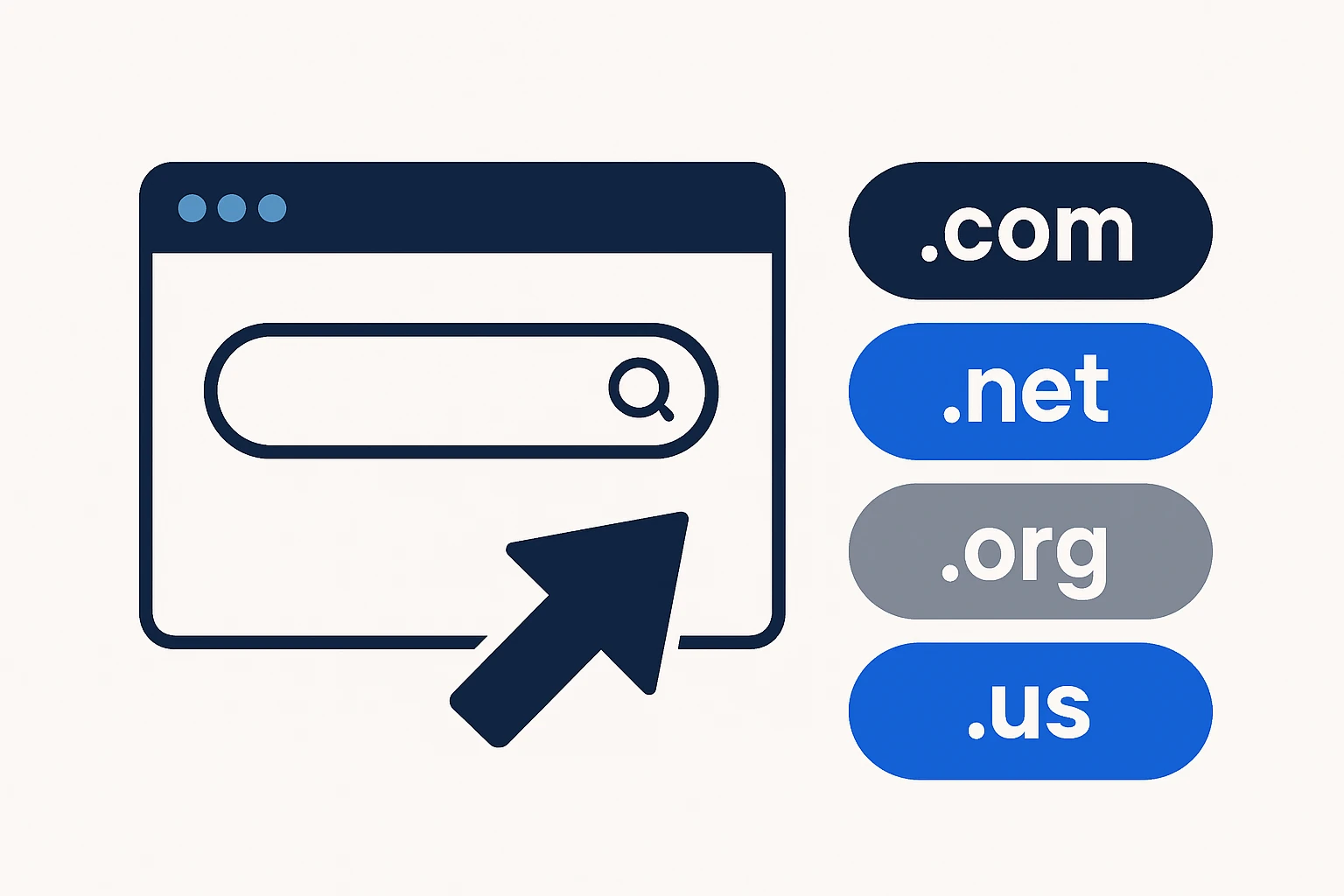
Domain names are more than a digital address - they are a brand asset, a trust signal, and a strategic tool for reaching audiences near and far. Yet for many US-based businesses, the decision about which domain extension to use is treated as a box-ticking exercise rather than a deliberate, data-informed choice. The landscape has expanded well beyond plain .com, with hundreds of generic top-level domains (gTLDs) and country-code top-level domains (ccTLDs) now available. Understanding what exists (and why it matters) can help you tailor your online presence to both your brand and your market. This guide walks through the full picture of all top-level domains, demystifies common concerns about SEO and local targeting, and offers a practical framework to decide which extension best serves your business goals. The information below is grounded in industry-standard references and current practice from major DNS authorities and SEO practitioners.
First, a quick map of the landscape: top-level domains are the last part of a domain name (the generic .com, .org, .shop family, or country-specific .uk, .de, etc.). The Internet Assigned Numbers Authority (IANA) maintains the root zone and the authoritative list of all TLDs, including both gTLDs and ccTLDs. This list is the source of truth for what extensions exist and who administers them. For a published, machine-readable view of the current TLD set, you can consult IANA’s Root Zone and the Root Files repository. (iana.org)
What are all top-level domains, and how do they work?
Top-level domains (TLDs) are the highest level of the domain name system. They are delegated by registry operators under the oversight of ICANN, the international nonprofit that coordinates the system. TLDs come in several flavors: generic TLDs (gTLDs) like .com, .org, and newer branded extensions such as .shop or .agency, and country-code TLDs (ccTLDs) like .us, .uk, or .de, which historically align with a country. The root zone data and official registries are the primary references for what exists and who administers each extension. (iana.org)
For readers curious about the practical implications, a helpful baseline is that the presence of a TLD is not in itself a ranking signal in most cases. The core of search ranking remains content relevance, authority, and user signals. The nuance is that ccTLDs can signal geographic intent, which search engines may leverage to tailor results to a region. That distinction matters for international or geo-targeted strategies. (searchengineland.com)
Types of TLDs: gTLDs vs ccTLDs vs new gTLDs
Generic TLDs (gTLDs) cover broad audiences and use cases - examples include .com, .org, .net, and newer entries like .shop, .tech, or .agency. Country-code TLDs (ccTLDs) are two-letter extensions that signal a country or territory, such as .us, .uk, or .de. In practice, ccTLDs are powerful for local or regional targeting because they help search engines and users understand the site’s geographic focus. The landscape has also expanded with new gTLDs that align to industries or brand narratives (for instance, .ai for artificial intelligence, .io popular in tech). SEO implications vary by extension and context, overall, major players treat gTLDs as functionally equivalent for ranking, while ccTLDs offer localization signals. (searchengineland.com)
Important caveats: while some newer or highly novel TLDs can attract trust challenges or indexing quirks, the dominant factor remains site quality. As several SEO industry analyses note, a TLD’s direct effect on Google rankings is limited, brand trust, user experience, and technical SEO play larger roles. When a TLD is perceived as low trust, it can indirectly affect engagement metrics and click-through rates, which can influence visibility over time. (searchengineland.com)
How to choose a domain extension for your business
Choosing a domain extension should be driven by audience, branding, and practical capacity to manage digital properties - not by a fear of SEO penalties. Consider these guiding questions as you evaluate options:
- Where is your audience? If your primary market is the United States, a widely trusted extension like .com remains a natural default. If you operate with a strong local or regional focus, a ccTLD such as .us or a geographically resonant domain like .nyc can reinforce local relevance. (searchengineland.com)
- How will branding shape perception? Some brands leverage newer or branded TLDs to convey a product focus (for example, a tech startup using .tech) or to create memorable domain handles. Branding decisions should be guided by how your audience perceives the extension, not solely by potential SEO gains. (searchengineland.com)
- What is your international strategy? If you plan regional sites or multi-language content, ccTLDs can clarify intent in specific markets, but you’ll need to consider the operational overhead of maintaining multiple distinct domains versus using subfolders or subdomains with hreflang signals. (searchengineland.com)
- Do you have the resources to maintain multiple domains? A multi-domain strategy increases complexity, bandwidth, and cost. If not carefully planned, it can dilute link equity and create maintenance burden. This is a real consideration for any business expanding into new markets. (searchengineland.com)
- How important is trust and CTR? For some audiences, certain extensions may affect perceived trust and click-through rates. In many cases, a traditional extension like .com remains the safest default for broad audiences, while newer TLDs should be chosen for branding alignment rather than SEO expectations. (searchengineland.com)
Framework aside, the practical starting point is mapping audience needs to extension options, then testing in a controlled way. To help you compare concrete options, consider viewing the available domain portfolios by TLDs or by country through provider catalogs. For example, WebAtla’s TLD listings offer structured views of domains by TLD and by country, which can be a helpful reference as you build your domain strategy. See List of domains by TLDs and List of domains in .com TLD for context.
A practical decision framework: DOMAIN DECIDE
To help teams apply a disciplined approach, use the DOMAIN DECIDE framework below. It synthesizes landscape knowledge with brand, audience, and resource considerations in a simple decision runbook:
- D - Define audience and geography: Identify primary markets and the language/currency expectations of users. If the goal is broad US reach, start with a familiar extension, if local signals matter, ccTLDs can reinforce intent.
- O - Observe the landscape: Review the current TLD ecosystem using authoritative sources (IANA for the official list) to understand what extensions exist and who administers them. (iana.org)
- M - Map branding opportunities: Align extension choices with brand positioning (tech startup, regional service, or consumer brand) to maximize memorability and trust.
- A - Assess SEO implications: Remember that most gTLDs do not offer direct ranking advantages, while ccTLDs can influence regional targeting. Prioritize technical and content quality as your primary SEO levers. (searchengineland.com)
- I - Implement a staged plan: If you plan multiple domains, document ownership, redirection strategy, and internationalization approach before registering. Start with a primary domain and a controlled set of variants to test user response and performance.
- N - Navigate international considerations: Decide whether subfolders/subdomains with hreflang or separate ccTLDs better fit your international goals, acknowledging the trade-offs in complexity and equity transfer. (searchengineland.com)
- E - Evaluate ROI: Build a simple KPI suite (brand recall, CTR, conversions, support costs) to judge whether an extension adds value or simply adds friction.
Limitations and common mistakes
Every domain strategy faces trade-offs. Here are the most common missteps to avoid, based on observed practitioner patterns and SEO guidance:
- Overreliance on SEO signals from TLDs: The direct SEO impact of a TLD is limited, most ranking advantages accrue from quality content, strong links, and a well-structured site. While ccTLDs can aid geo-targeting, this signal should supplement, not replace, other localization tactics. (searchengineland.com)
- Bridging branding and trust without testing: New or branded TLDs can be memorable, but user trust varies by audience. Test audience perception and CTR before committing to a large portfolio. (searchengineland.com)
- Underestimating maintenance costs: Managing multiple domains across regions can inflate technical debt and support overhead. A disciplined scope and centralized governance are essential. (searchengineland.com)
Resources and practical next steps
If you’re assembling a global domain strategy, access to up-to-date domain catalogs can help you balance branding, reach, and operational capacity. For readers who want a readily browsable reference, WebAtla offers a structured view of domains by TLDs and by country that can inform your planning. See List of domains by TLDs and List of domains in .com TLD as starting points. In parallel, you can consult authoritative basics about the TLD ecosystem from the Internet Assigned Numbers Authority (IANA), which maintains the Root Zone Database and the official Top-Level Domain List. (iana.org)
In practice, most US-based organizations will find that a traditional extension like .com remains a safe default for broad audiences, while curated use of ccTLDs or industry-focused gTLDs can support targeted campaigns and brand differentiation when resources allow. If your organization is evaluating a large portfolio or seeking guidance on a mixed strategy, consider a phased approach that tests user response, tracks performance, and aligns with your brand’s long-term positioning.
For teams seeking a hands-on, editorially grounded partner to help implement a domain strategy in the US market, DaivietWeb’s network and content strategy framework can complement a technical plan. (Note: the client URLs above link to WebAtla’s TLD resources for reference and comparison.)
Conclusion
The world of top-level domains is broad, but your decision should remain anchored in clear business objectives: who you serve, how you want to be perceived, and how much operational complexity you can sustain. A thoughtful approach to domain extensions - supported by reliable references such as the IANA root zone data and current SEO guidance - helps you build a domain strategy that scales with your brand, not merely with the registry of the moment. When in doubt, start with a strong, trusted extension for broad reach, explore branding-aligned options for differentiation, and use geo-targeting signals only as part of a broader localization plan. The landscape will continue to evolve, but a disciplined framework will keep your domain strategy aligned with your business goals.