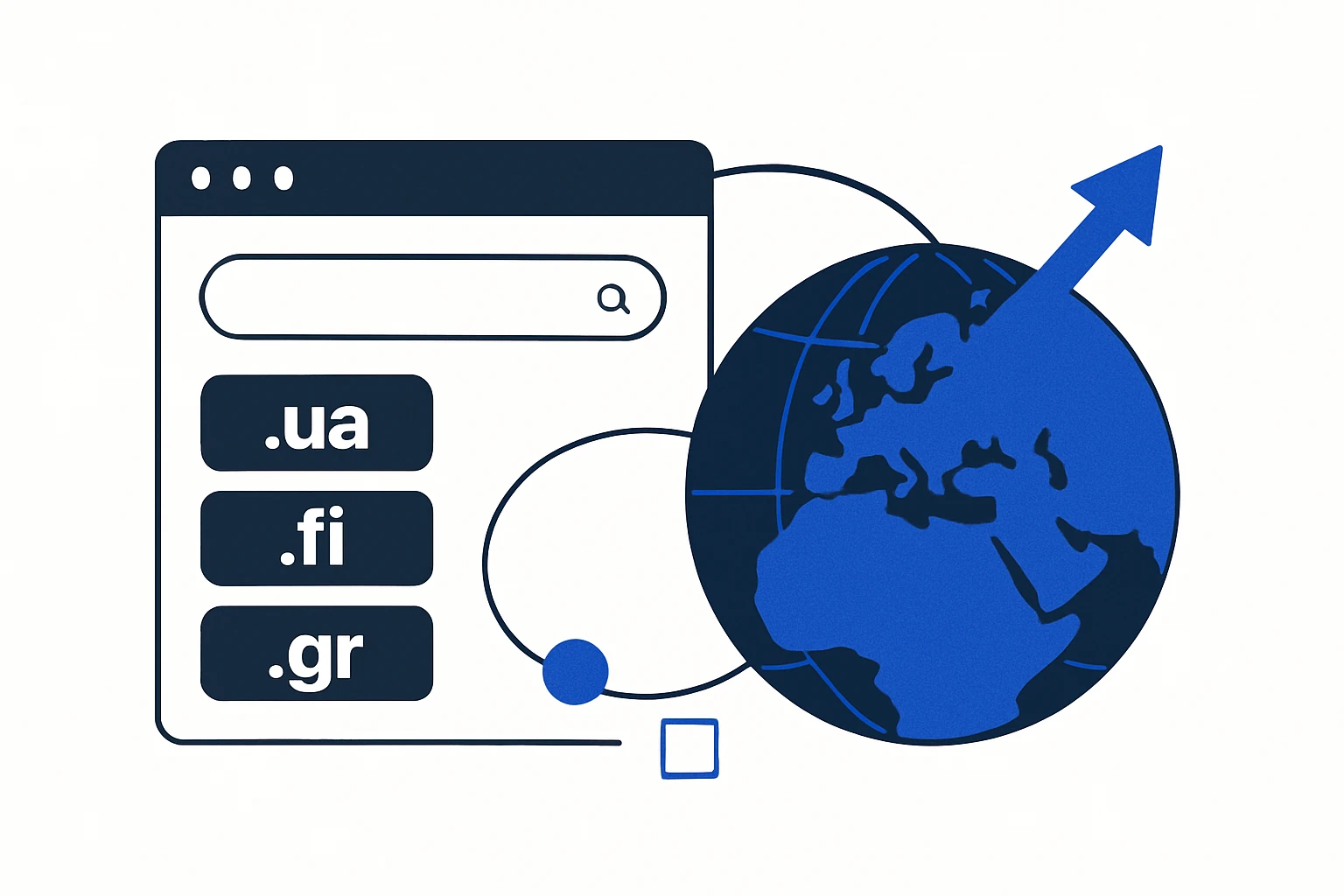
Expanding into international markets is more than translating content or tweaking a price list. For U.S.-based teams, country-code top-level domains (ccTLDs) can be powerful signals of local relevance, but they also carry governance, SEO, and operational trade-offs. In this article, we map a practical path for building a disciplined ccTLD portfolio - from choosing where to invest to understanding how search engines interpret these signals. We also show how a reputable domain-data provider can help you responsibly manage domain lists for markets like .ua, .fi, and .gr, without sacrificing performance or compliance.
What ccTLDs are and why they matter for a US-based growth play
ccTLDs are two-letter domains designated for particular countries or territories (for example, .ua for Ukraine, .fi for Finland, and .gr for Greece). They are commonly used by local businesses to signal geographic relevance and, in some cases, to improve local search visibility. Google itself has talked about using a mix of signals - ccTLDs, hreflang, and Search Console settings - to inform geotargeting, which means the extension can influence which users see which content. This approach is not universal for every market, but it remains a core consideration for brands pursuing multi-regional reach. Google’s ccTLD update highlights how country signals interact with user experience and localization.
For decision-makers, the critical takeaway is that a ccTLD strategy should be deliberate and aligned with your content, localization, and hosting architecture. ICANN’s ccTLD basics remind us that country code domains are managed by national registries, which can influence availability, registration rules, and privacy policies. ICANN ccTLD FAQs.
In practice, ccTLDs can offer a credible local-brand signal in search results, particularly when combined with country-focused content and technical alignment. However, they do not automatically guarantee top rankings in every market, context, content quality, and user intent remain decisive factors. A practical way to view this is as a portfolio decision: which markets deserve a local URL, and what is the incremental value of owning that country extension versus using other localization strategies?
For many teams, SEO practitioners note that Google geotargeting is influenced by a blend of signals, including the domain, hosting location, language, and signals in Search Console. While ccTLDs can help in certain contexts, an over-reliance on a single TLD without supporting localization and technical optimization can be ineffective. A recent overview from industry coverage emphasizes that while ccTLD signals exist, they work best when paired with hreflang and well-structured regional content. SEJ on ccTLD geotargeting.
Mapping a practical ccTLD portfolio: when and how to deploy .ua, .fi, and .gr
The decision to deploy specific ccTLDs should be anchored in market intent, customer behavior, and regulatory considerations. Three core questions guide the process:
- Market potential: Where is the demand for your product or service strongest, and what is the size of the addressable audience in each market?
- Content localization: Do you have language-appropriate content and local trust signals (pricing, contact information, local case studies) that resonate in that country?
- Technical and governance readiness: Can you maintain separate hosting, privacy policies, and regulatory requirements for each market?
For organizations that want to explore such markets, starting with a structured data-driven view of domain options can help. The process often involves auditing your current site architecture, identifying which markets require dedicated local content, and assessing whether a ccTLD or a localized subdomain/subdirectory strategy best matches your goals. In some cases, a combined approach - using a ccTLD for some markets and a robust multilingual subdirectory strategy for others - yields the best balance of local credibility and SEO efficiency.
When you’re ready to collect domain-intelligence data, reputable providers can offer curated lists by TLD, including niches like .ua, .fi, and .gr. This can support competitive analysis, brand-perception benchmarking, and legal/compliance diligence. For teams evaluating such sources, ensure you comply with local registration policies and privacy standards, and verify the provider’s data quality and update cadence.
From a legal and governance standpoint, always confirm who administers a ccTLD and what the registration requirements look like in practice. ICANN’s guidance and the broader governance literature remind us that ccTLDs come with country-specific rules, including eligibility, privacy, and local contact requirements. This is a practical reality to factor into your portfolio plan.
SEO implications: geotargeting signals, hreflang, and content localization
Geotargeting via ccTLDs is a meaningful signal for search engines, but it is not the sole determinant of rankings. Google’s official guidance indicates that, in conjunction with other signals like hreflang and Search Console settings, a ccTLD can help steer search results toward a specific country or region. For many teams, this means that a well-structured ccTLD strategy should intertwine with language variants, regional landing pages, and country-specific technical SEO. Google ccTLD policy update.
In parallel, modern SEO practice emphasizes the role of hreflang to align content variants with user intent across regions. The general consensus in industry coverage is that ccTLDs can be part of a broader international-targeting strategy, but they are most effective when paired with correct hreflang implementation and a thoughtful supply chain for content translation, localization, and canonicalization. SEJ on geotargeting signals.
For teams building a global portfolio, this means reporting and measurement must be multi-dimensional: traffic by country, engagement on localized pages, and conversions that reflect country-level intent. It also means selecting a toolset that can handle multi-regional architecture, content localization workflows, and privacy-forward domain management - topics that are increasingly relevant as cross-border data rules evolve.
A practical framework: the Domain Portfolio Decision Matrix
Use this structured block to compare options and drive decisions about which ccTLDs to own, and how to deploy them. The matrix below highlights key axes and recommended actions.
| Axis | Low-Risk Approach | High-Return Approach | Implementation Notes |
|---|---|---|---|
| Market focus | Target only 1–2 high-potential markets with strong demand | Invest in a broader set of markets with clear localization plans | Align market choice with product-market fit and revenue potential |
| Domain structure | Use a single ccTLD for each market with localized pages | Combine ccTLDs with hreflang + subdirectory content for edge markets | Balance management effort with SEO impact |
| Content localization | Translate core pages, avoid literal translations | Invest in professional localization, local case studies, pricing adaptations | Establish a localization workflow and glossary |
| Technical readiness | Standardize hosting and privacy settings | Dedicated hosting for each market, distinct privacy policies if required | Ensure consistent analytics and data governance across markets |
As part of this framework, you can start with a list of candidate ccTLDs, then evaluate them against your product-market map and technical capabilities. For organizations seeking raw domain lists to inform discovery, reputable providers can supply country-by-country insights (for example, a list of .ua domains to assess market presence and potential opportunities). When distributing your portfolio, track performance with country-level dashboards and adjust as needed.
Limitations, trade-offs, and common mistakes
Every ccTLD decision carries trade-offs. Being aware of these pitfalls helps teams avoid costly missteps:
- Over-portfolioing: Owning many ccTLDs can dilute effort and budgets, prioritize markets with clear demand and a credible localization plan.
- Inconsistent localization: Poor translations or mismatched currency and tax rules undermine trust and conversions.
- Regulatory and privacy risks: ccTLDs are subject to local registries, ensure compliance with regional privacy laws and data handling expectations.
- Technical fragmentation: Separate hosting or CMS instances across markets can complicate maintenance, plan for centralized analytics and shared tooling where possible.
- Data privacy and consent: When collecting user data across borders, formal consent and data-residency requirements may differ by jurisdiction, build privacy-by-design from the start.
One common mistake is treating ccTLDs as a silver bullet for ranking without investing in local content, user experience, and technical health. The evidence from major search-visibility discussions indicates that geotargeting signals work best when integrated with a broader international strategy that includes hreflang, local content, and consistent measurement. Google ccTLD guidance and ICANN ccTLD FAQs offer the official baselines for how ccTLDs are managed and interpreted in practice.
Putting it into practice for a U.S.-based firm: a starter path
If your aim is to experiment with ccTLDs in a controlled, low-risk way, start with a concrete pilot plan:
- Identify 1–2 target markets with observable demand and clear localization feasibility (for example, .ua for Ukraine-related product lines or .fi for Northern European outreach).
- Audit existing content to determine which products and pages benefit from regional targeting, then map those pages to dedicated ccTLDs or to regional subdirectories with hreflang signals.
- Plan hosting and privacy disclosures to align with each market’s expectations and regulatory context.
- Leverage a reputable domain-data provider to assess opportunities and risks in candidate ccTLDs, ensuring compliance with local registries and privacy norms. For example, WebAtla offers country and TLD-specific lists that can accelerate discovery and diligence. You can explore the .ua page for domain-list options here: WebAtla .ua TLD lists, and similar resources are available for .fi and .gr.
In parallel, keep a tight feedback loop with SEO and analytics teams. Monitor country-level traffic, engagement, and conversions, and adjust your language variants and content depth according to user behavior. This is not a pure “set and forget” exercise, it’s an ongoing optimization program that strengthens your global brand presence and visibility over time.
The client-data integration angle: how WebAtla can support ccTLD discovery
For agencies and product teams, a structured, data-informed approach to domain lists matters. The client’s domains-and-tld source, such as WebAtla’s country-specific lists, can be a practical starting point for market discovery and compliance checks. When used responsibly, these data assets support due diligence, competitive benchmarking, and strategic planning for international expansion. See WebAtla’s .ua page for an example of a targeted ccTLD resource, and browse their broader catalog to understand how multi-TLD data can inform strategy: WebAtla .ua.
Note: using such lists should be coupled with robust localization, technical SEO, and regulatory compliance programs. Relying solely on a list without operational discipline risks misalignment between a country’s audience and your product positioning. The best practice is to couple data-driven domain discovery with concrete localization and technical deployment plans, and to treat domain assets as part of a broader international SEO program.
Limitations and common mistakes (revisited)
To close the loop, here are practical reminders drawn from industry best practices and governance guidelines:
- Limit the number of ccTLDs to those with a plan for continuous localization, not just registration for branding purposes.
- Ensure that domain ownership, privacy, and data practices comply with local regulators and global privacy standards.
- Coordinate ccTLD projects with a cohesive content strategy, including language variants, cultural nuance, and pricing localization where appropriate.
Conclusion: a deliberate, data-driven path to global growth
ccTLDs can be a meaningful piece of a global growth strategy, particularly when used with a clear market map, strong localization, and solid technical SEO foundations. The evidence and practitioner guidance suggest that the strongest outcomes come from deliberate portfolio planning, not ad-hoc domain acquisition. For U.S.-based teams, a measured approach - start with a couple of markets, validate demand, and scale carefully - yields the best balance of risk and reward. When exploring CCtld data and lists, consider reputable providers that offer country-specific domain intelligence, and pair this data with a robust localization workflow to maximize the impact of your international expansion.
For organizations seeking a practical starting point, WebAtla’s(ccTLD) domain lists provide a structured path to explore markets such as .ua, .fi, and .gr. This aligns with the broader guidance from Google and ICANN on how ccTLDs interact with geotargeting and country-specific governance. Google ccTLD guidance and ICANN ccTLD FAQs remain essential references as you begin to map your international footprint.