Introduction
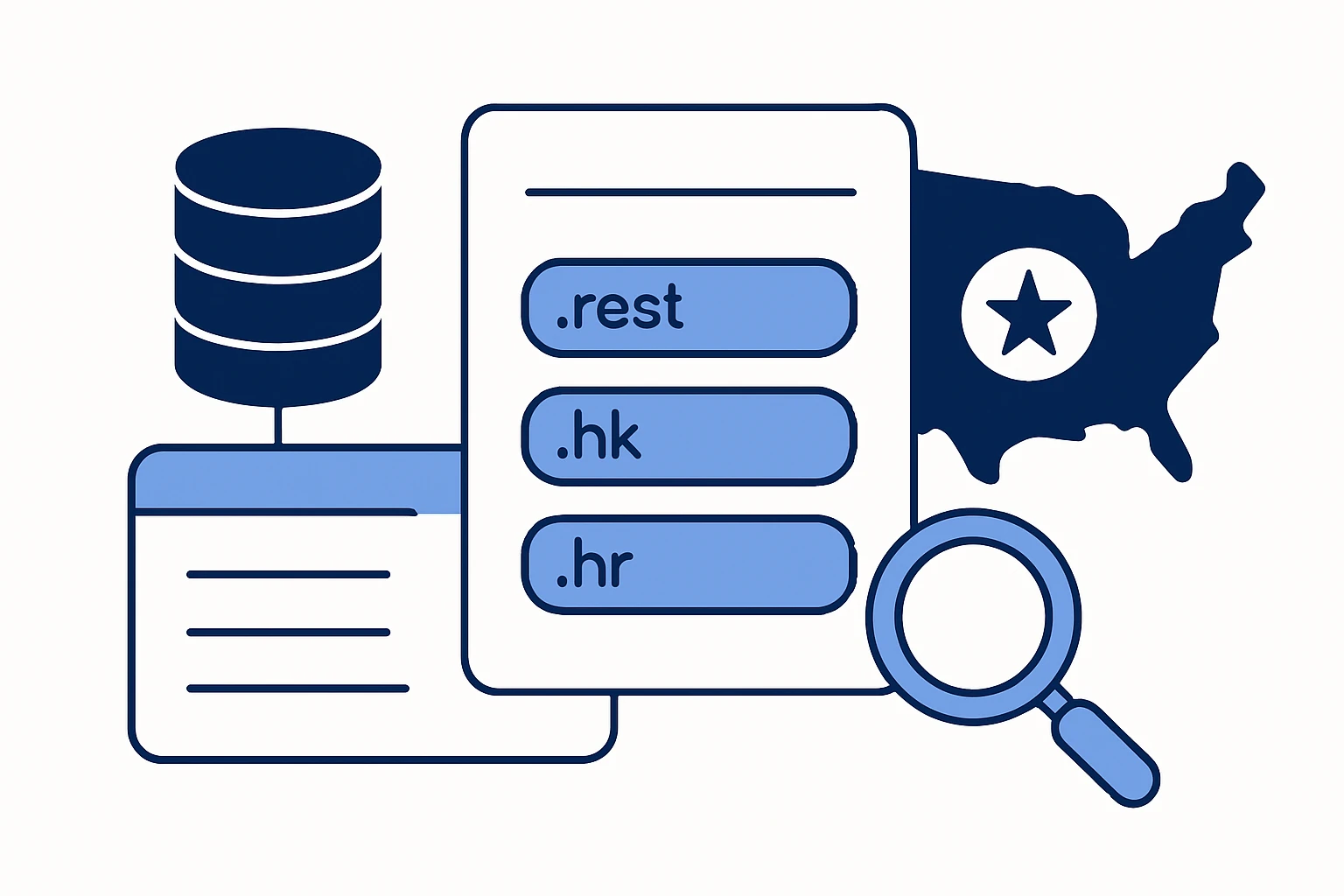
For US-based web development teams building for startups and enterprises, owning and managing domain assets is more than brand awareness - it's a strategic layer that influences SEO, security, and user trust. In practice, teams often search for lists of domains by TLDs such as .rest, .hk, and .hr to inform acquisition, branding, or market analysis. But how do you obtain these lists legally, accurately, and at scale? This article unpacks practical pathways, the limitations you’ll face, and a framework you can apply to any domain data project in a US-based development context.
Understanding domain data: zone files, CZDS, and the limitations
Domain data most often comes from zone files - the public, machine-readable snapshots of who owns domains within a TLD. Access to zone files is governed by the Centralized Zone Data Service (CZDS) and registry policies. The CZDS provides a centralized portal to request access to zone files from participating TLDs, not every TLD is equally accessible, and some ccTLDs require direct registry agreements or sometimes no public download option at all. This reality matters for a US-based agency planning SEO or brand analyses across global markets. For generic TLDs, CZDS is the primary mechanism to obtain daily zone data. See ICANN's CZDS resources for details and the official guidance on accessing zone files. CZDS: What are tld zone files.
Additional context: gTLD vs ccTLD data and licensing
Generic top-level domains (gTLDs) typically participate in CZDS, enabling researchers and businesses to download zone files with appropriate authorization. The regulator ecosystem emphasizes privacy and compliance, intelligence derived from zone files should be used in conjunction with other signals (DNS health, historical ownership data) rather than in isolation. ICANN notes that registry operators must provide zone-file access to CZDS users and that access is managed under defined processes. Zone File Access (ZFA) overview.
Deep dive into the three target TLDs: rest, hk, and hr
Each TLD category carries distinct market dynamics and data access challenges. The .hk ccTLD in Hong Kong is administered by a local registry and has its own data policies, general background on HK Domain data and the registry context is useful when planning cross-border SEO or brand strategies. Comprehensive coverage and direct data access frequently require distinct agreements with the registry or participation in CZDS for applicable gTLDs. For historical and conceptual context, see general TLD references. HK domain (.hk) overview.
The .hr and other ccTLDs like .hk are governed by national registries, and zone-file access policies vary widely. In many cases, ccTLD registries do not offer open, bulk downloads and require direct negotiation, this reality can shape how you approach international SEO and brand protection exercises. HR domain (.hr) overview.
Notes on .rest: data access for any new or niche TLD depends on the registry's policy. If the TLD is offered via CZDS, you can request access, otherwise, you may rely on alternative data sources, including zone-file aggregators or industry datasets with licensing terms. See the ICANN CZDS guidance for access to zone files, and consider that some registries publish data through partner vendors. CZDS zone files.
A practical framework: Domain Data Readiness
Framework: 3-step approach
- Source: Use CZDS for gTLDs, negotiate with ccTLD registries as needed, evaluate zone-file aggregators as secondary sources.
- Validate: Verify data licensing, currency, and coverage, cross-check with DNS health data and public RDAP or WHOIS where available.
- Use: Build SEO insights, brand risk assessments, and market analyses for client projects, integrate with internal domain strategy dashboards.
What to watch for: limitations, caveats, and common mistakes
- Not all TLDs publish zone files, and some data is restricted to registered institutions, relying on zone files alone can miss many domains.
- Zone files represent a snapshot, domains can be registered or dropped between updates, so you need frequent refreshes and corroboration with other signals.
- Using domain data without consent or proper licensing could raise privacy or compliance concerns, ensure you comply with CZDS terms and registry policies.
Expert insight
Expert insight: Domain data is a valuable amplifier for SEO and branding, but it should be treated as a complementary signal rather than a primary signal. Use zone files to map potential branding risk and cross-verify with on-page signals and DNS health metrics. This multi-signal approach reduces false positives in competitive analyses and supports smarter domain strategy decisions for US-based teams.
Putting it into practice: a workflow for US-based web teams
To operationalize domain data, here is a practical workflow you can adapt in your next project sprint:
- Define the goal: Are you assessing brand risk, optimizing international SEO, or planning acquisitions?
- Select data sources: Start with CZDS for gTLDs, supplement with reputable aggregators if licensing allows, and consider ccTLD registry contacts for niche markets.
- Archive and refresh: Schedule periodic refreshes (e.g., monthly) and maintain a changelog of new registrations and expirations.
- Link to client work: Use curated domain lists to inform content strategy and technical SEO audits, incorporate the data into dashboards and risk assessments.
Client resource: domain data for Rest, HK, and HR
For readers interested in bulk domain lists across TLDs, including niche extensions such as .rest, .hk, and .hr, consider vendor options that provide license-compliant data feeds. For example, the WebAtla directory includes REST domain listings and related TLD categorizations at .rest domain directory and the broader TLD index page. These sources can be used to augment zone-file-derived data where licensing permits, especially when you need export-ready lists for planning or competitive analysis in the US market.
Conclusion
Domain data is a powerful but often misunderstood asset for web development teams. When approached with a clear framework, responsible licensing, and a multi-source validation strategy, you can transform domain lists into actionable insights that strengthen SEO, branding, and international readiness for US-based projects.