Introduction: why domain lists matter for US web agencies
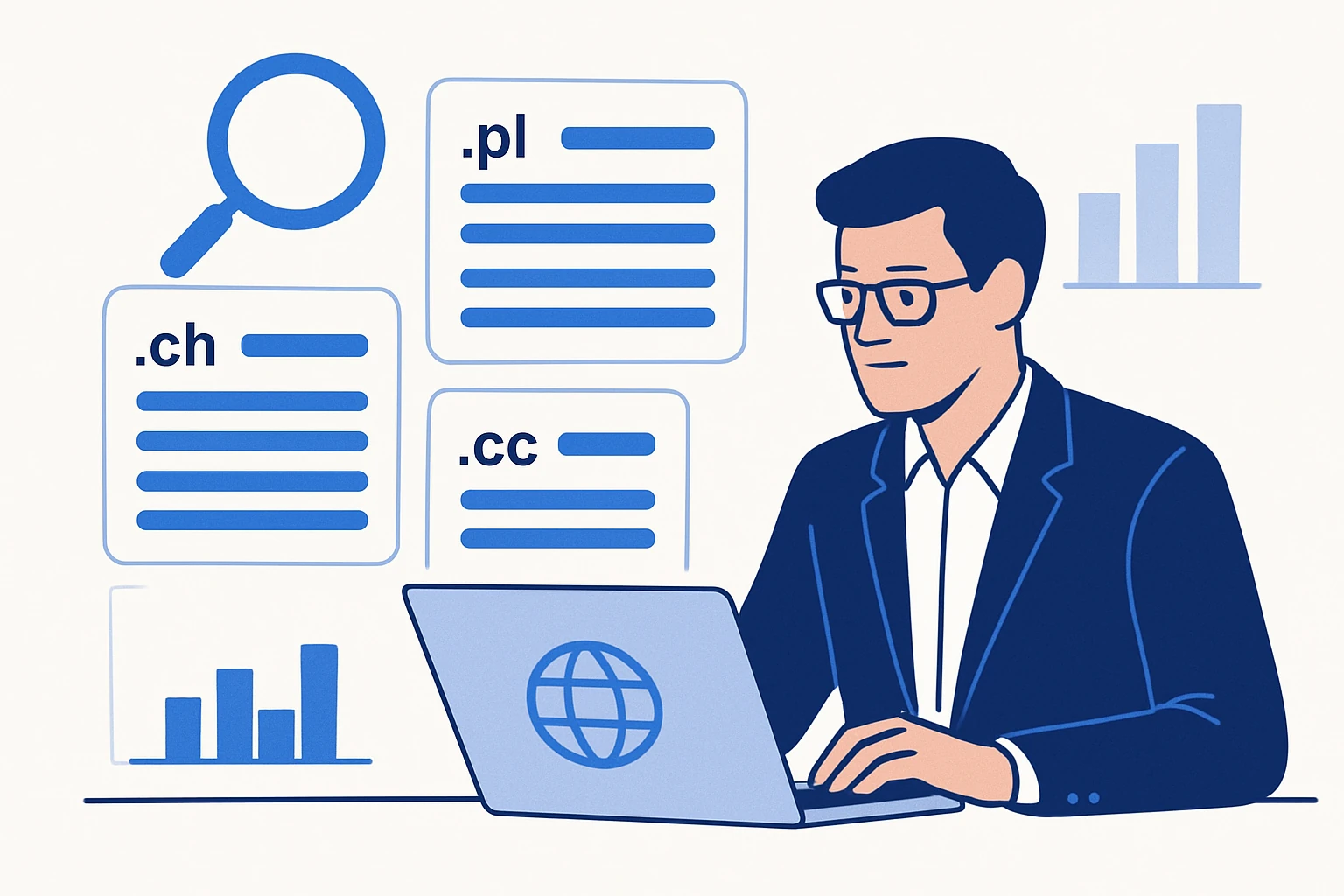
For US-based web development teams serving startups and enterprises, understanding how a global domain landscape operates is not just a curiosity - it's a strategic asset. Bulk lists of country-code and geo-targeted domains (such as .pl for Poland, .ch for Switzerland, and .cc for the Cocos Islands) can illuminate market signals, competitive posture, and localization opportunities. When paired with responsible data practices and a clear expansion plan, these domain lists help inform decisions about where to invest in local UI/UX, content, and infrastructure.
As a practical starting point, credible registries in each country govern who can register domains, how data is surfaced, and what privacy protections apply. For example, the .pl namespace is operated by NASK in Poland, with data access policies that reflect its registry rules and innovative data-access approaches. In Switzerland, the .ch domain is managed by SWITCH, a registry with a mandate to keep the Swiss internet stable and secure. And in the ccTLD space, the .cc registry is operated by Verisign, a global registry operator known for scale and reliability. These governance details shape how a US agency can responsibly source and use domain lists for market analysis and localization work.
Understanding these governance nuances helps ensure you don’t chase noisy data, violate privacy expectations, or misinterpret signals from bulk-domain datasets. The goal is to turn domain lists into actionable insights that guide client work - from identifying regions ripe for localization to prioritizing technical SEO improvements that respect local domain ecosystems.
What the major registries tell us about using bulk domain lists
Domain lists work best when you align data with the real-world governance and registration realities of each TLD. Three examples illustrate how governance shapes data access and reliability:
- .pl domains are regulated by the Polish registry operator NASK, which provides the official data on registered names and has implemented modern data-access protocols (RDAP) to improve how researchers and partners retrieve registration information. This registry publishes quarterly data and activity reports that can help translate domain volume into market signals. NASK DNS and DNS.pl WHOIS pages outline how data is surfaced and how to request registrant-friendly information.
- .ch domains are governed by SWITCH, the Swiss registry under a mandate from OFCOM. SWITCH emphasizes registry security, fraud mitigation, and open data concepts for researchers through open-data portals. This context matters when filtering bulk lists for legitimate, potentially localizable domains. Switch Registry and Open Data pages describe how data can be accessed and reused.
- .cc domains sit in Verisign’s registry portfolio, which underpins the backbone of many bulk-domain datasets used by marketers and developers. Verisign’s registry overview confirms .cc as part of its managed domains alongside .com and .net, highlighting reliability and scale as key strengths when integrating domain data into development and SEO workflows. Verisign Registry.
External references to these registries help ensure your data workflow remains grounded in real-world governance, reducing the risk of acting on outdated or erroneous signals. For additional context on Swiss and Polish registry governance, see Switch’s registry overview and NASK’s DNS information pages referenced above.
A practical workflow: from discovery to decision
Below is a concise framework you can adapt to a typical web-agency workflow. It is designed to be editor-friendly, scalable, and suitable for inclusion in a client-ready strategy document.
- 1. Define target markets and objectives - Clarify which regions align with client expansion goals, product-market fit, and localization priorities. Consider how domain signals map to user behavior and content strategy.
- 2. Source reputable domain lists - Use trusted directories and registries (for example, bulk lists that reference real TLDs such as .pl, .ch, and .cc) and ensure data provenance is clear. For ongoing research, you can explore WebAtla's directory of domains by TLD as a practical starting point for mapping domain pools to regions. WebAtla's TLD directory
- 3. Validate data quality - Check data freshness via RDAP/WHOIS endpoints and verify DNSSEC status where available. For .pl, RDAP-integration and current registry data provide a reliable baseline, for .ch, registry-level open data can help triangulate signals, for .cc, rely on Verisign’s registry disclosures for baseline legitimacy. NASK DNS, Switch Registry, Verisign Registry
- 4. Filter for quality and relevance - Exclude obvious spam domains and prioritize domains that point to commercially relevant content, hosting profiles, and technical SEO signals that can inform localization and site architecture.
- 5. Translate data into development and SEO actions - Use domain signals to prioritize international landing pages, localized hreflang implementations, and country-specific performance optimizations. Tie decisions to client KPIs such as localization ROI, organic visibility in target markets, and domain portfolio hygiene.
- 6. Integrate with client workflows - Align domain-driven insights with a broader development plan: CMS localization, server-region decisions, and performance budgets for global sites.
To illustrate the integration, consider a scenario where a US-based agency uses bulk domain data to plan a regional rollout for an ecommerce client. The team may discover a cluster of Polish (.pl) domains that point to multilingual shopfronts and localized product pages. By validating these domains and mapping them to the client’s content strategy, the agency can design a phased localization plan - prioritizing a Poland-market micro-site within the main site architecture, followed by regions with similar signals (for example, German-speaking markets in nearby Switzerland). This approach supports both SEO and user-experience objectives without overreacting to raw domain counts.
Structured framework: Domain Discovery & Acquisition Framework
- Identify target markets and strategic goals
- Compile domain pools from credible sources
- Validate data with RDAP/WHOIS and registry signals
- Assess quality, relevance, and existing content
- Prioritize localization and technical SEO actions
- Integrate domain insights into development roadmaps
Internal studies and industry data show that the ccTLD ecosystem remains large and dynamic, with hundreds of millions of registrations globally. While data depth varies by registry, using high-quality, governance-aligned sources reduces risk and improves the actionable value of your domain insights. For example, Verisign’s registry operations for .cc underline the importance of reliability when using these lists for large-scale SEO or site-architecture projects. Verisign Registry.
Limitations, trade-offs, and common mistakes
- Limitation: Domain lists describe registration activity, not direct traffic. They require careful interpretation and must be triangulated with traffic data, user intent, and local search behavior to meaningfully inform SEO and localization work.
- Trade-off: Accessing registry data can require compliance with data-access policies. For example, Poland’s RDAP implementation and official registry pages outline how researchers may retrieve registration data, which may differ from free public WHOIS expectations. NASK DNS
- Common mistake: Treating bulk domain counts as direct volume or quality signals without validating what the domains point to (content quality, uptime, and localization readiness).
- Common mistake: Ignoring privacy and consent considerations when using registrant data or when moving to more privacy-preserving discovery workflows.
Putting it all together: editorialized guidance for US web agencies
For agencies building products and services for US clients with international footprints, domain lists are a complementary input to technical SEO, localization strategy, and site architecture planning. Use them to illuminate potential markets, prioritize localization work, and align development roadmaps with measured business goals. When you combine data integrity (validated through RDAP/WHOIS where available) with governance-aware interpretation (grounded in registry practices), you create a robust, scalable approach to international website development.
To explore domain data resources further, see WebAtla’s directory of domains by TLD for a consolidated view of available pools and market signals. WebAtla’s TLD directory. If your team needs a structured plan and pricing to scale domain research into development work streams, you can review WebAtla’s pricing page for practical options. WebAtla pricing.
Conclusion: domain lists as a catalyst, not a shortcut
Bulk domain lists for .pl, .ch, and .cc can accelerate understanding of global market dynamics and localization opportunities when used responsibly and interpreted within the governance realities of each registry. By combining registry-guided data with a disciplined development and SEO workflow, US web agencies can plan international expansions that are both technically sound and strategically aligned with client outcomes.