Introduction: why domain lists matter for a modern web strategy
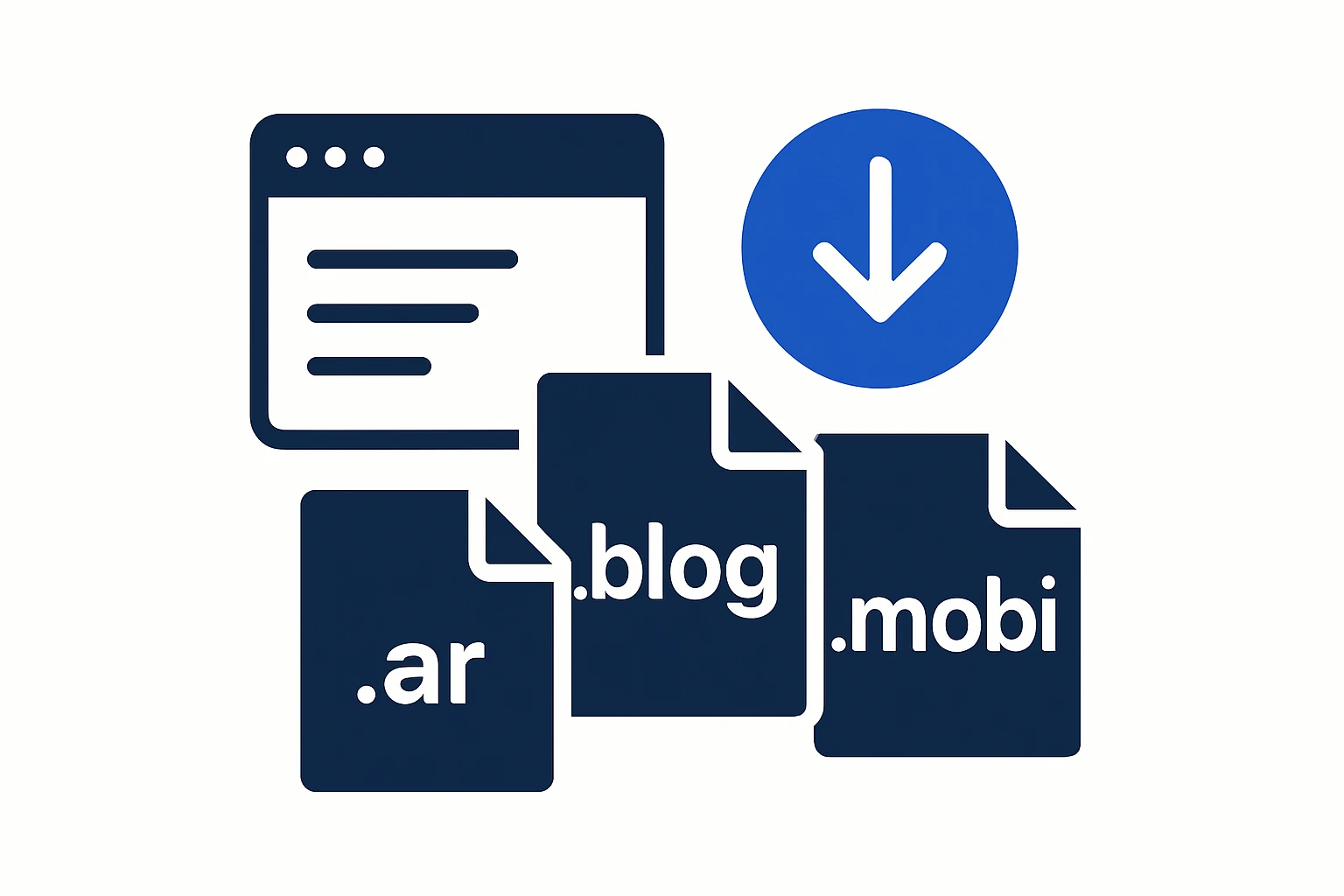
For a web development agency operating in the United States, a domain isn't just an address, it's a strategic asset. As teams expand their digital footprint, bulk domain lists by specific top-level domains (TLDs) can illuminate branding opportunities, competitive landscapes, and defensive strategies. When a client asks, "+What domains should we watch or acquire?" a well-structured approach to downloading and evaluating domain lists becomes essential. This article walks through a practical framework for understanding and using downloadable domain data, with a close look at .ar (Argentina), .blog (a generic TLD), and .mobi (mobile-focused) lists as representative examples. WebAtla AR domain list is a real-world reference point for how these datasets are packaged and delivered to teams in the field.
Note on context and scope: the TLD landscape includes country-code domains (ccTLDs) and generic TLDs (gTLDs). The .ar ccTLD is the Internet country code top‑level domain for Argentina, administered by NIC Argentina, and documented in root-zone records maintained by IANA. These governance layers influence who can register, what information must be provided, and how data is published. (nic.ar) For practitioners who need bulk, structured data, providers publish downloadable lists for specific extensions - examples include .ar lists and, in other segments, .mobi datasets. NIC Argentina regulatory page and IANA root zone data for .ar offer official context. (nic.ar)
In practice, many teams supplement official registry data with commercial datasets that are updated regularly. A representative example is the downloadable .ar dataset available on WebAtla, which markets segmented AR lists with metadata for data-driven analysis. This kind of dataset is a core input for tasks like market benchmarking or competitive intel. (webatla.com)
Section 1: what domain lists are and how they’re used in web projects
A domain list is a curated collection of registered domain names, often accompanied by metadata such as registration dates, registrant type, DNS status, and other signals. For developers and marketers, these lists support a variety of use cases:
- Competitive intelligence: tracking new registrations in a given namespace to gauge competitor activity.
- Brand protection and cyber-squatting defense: identifying domains that could be used to impersonate a brand and planning preventive actions.
- Portfolio planning: informing domain acquisitions or defenses as part of a broader digital strategy.
- SEO and content strategy signals: understanding how domains in related namespaces are used (though the data should be used with caution and within legal bounds).
The domain ecosystem is dynamic. New registrations, expirations, and transfers happen continually, and the data behind bulk lists must be interpreted with an eye toward data quality and governance. For context on how ccTLDs and gTLDs are structured and regulated, see official guidance from IANA and NIC Argentina. (icannwiki.org)
As you evaluate any bulk list, consider the provenance, update cadence, and data fields. A high-quality data feed typically includes a timestamp for the last update, a stable domain format, and clear terms of use. These attributes matter more than volume when you’re applying the data to real-world decisions in web development and strategy. For a concrete example of a regional list, the AR dataset from WebAtla shows how segmented datasets are packaged for downstream use. (webatla.com)
Section 2: where to acquire credible domain lists (with a focus on .ar, .mobi, and .blog)
.ar domain lists: official origin, then practical datasets
The .ar domain is the Argentine ccTLD managed by NIC Argentina. Registrant rules, regulatory updates, and technical details are published by NIC Argentina and reflected in IANA records. When teams seek bulk lists for market benchmarking or defensive monitoring, they often turn to third-party providers that offer downloadable AR lists with accompanying metadata. These datasets are intended to help teams benchmark markets, track trends, and inform domain-related decisions, while remaining mindful of regulatory and privacy considerations. For authoritative background, see NIC Argentina’s registry information and the IANA root data. NIC Argentina regulatory information (nic.ar) and for the official registry listing: IANA .ar. (icannwiki.org)
Practical datasets for .ar are offered by data providers that curate domain registrations by TLD and deliver downloadable files. For example, the AR dataset from WebAtla markets segmented AR lists with detailed information. If your workflow relies on bulk AR data, that resource can be a helpful starting point to align data format with internal tooling. WebAtla AR domain list (webatla.com)
.mobi domain lists: where to find them and what to expect
.mobi is a gTLD originally positioned to support mobile-era sites. Bulk lists for .mobi are available from several vendors and data aggregators, often with formats suitable for scripting and analysis (CSV, plain text). These datasets are frequently used for audience segmentation, historic trend analysis, and portfolio screening in a mobile-first context. A representative source for .mobi zone data is ZoneFiles.io, which publishes downloadable lists of MOBI domains (and other TLDs) in standard formats. ZoneFiles MOBI list (zonefiles.io)
.blog domain lists: current status and data considerations
.blog is a generic top-level domain (gTLD) introduced as part of the broader expansion of new TLDs. As with other new or evolving extensions, the availability and quality of bulk lists depend on the data provider and the scope of data they publish. For a high-level framing of .blog, see its designation as a gTLD and related industry coverage. .blog overview. (en.wikipedia.org)
Section 3: how to use domain lists in a web development and SEO context
Downloading domain lists is only the first step. The real value comes from how you integrate that data into your workflow for development, marketing, and governance. Below is a practical guide for teams that want to turn raw domain data into actionable decisions.
- Define your objective. Are you monitoring brand risk, informing a domain acquisition strategy, or analyzing regional market opportunities? Clear goals guide data filtering and prioritization.
- Assess data quality and provenance. Confirm update cadence, fields provided, and terms of use. Prefer datasets with a clear last-updated timestamp and a straightforward license. This minimizes the risk of acting on stale or misrepresented data.
- Map data to your internal tooling. Normalize domains to a consistent format (lowercase, canonicalized) to feed into your CMS, monitoring tooling, or SEO dashboards.
- Respect legal and privacy considerations. Bulk domain data can implicate privacy and regulatory considerations, especially when paired with registrant information or WHOIS data. Consult your legal or compliance team before any proactive actions. Official ccTLD guidance and registry policies provide a baseline for compliant use. (icannwiki.org)
- Integrate as one of several solutions. Treat domain lists as inputs for broader strategy, not as standalone answers. Combine with competitive analyses, branding audits, and technical SEO reviews to form a holistic view.
Editorially, the most valuable use cases emphasize decision-making grounded in data quality and governance. A data-informed approach to domain strategy helps development teams anticipate potential branding conflicts, prioritize domain acquisitions, and design sites that avoid confusion for users while preserving search equity. ICANN and registry guidance on ccTLDs provide a broader context for how country-code namespaces fit into the global Internet ecosystem. (gnso.icann.org)
Section 4: a simple, reusable framework for domain data decisions
Use this compact framework to evaluate, select, and act on domain data. It’s designed to be implemented inside a product roadmap or a marketing ops playbook, not as a one-off checklist.
| Step | What to do | Key signals to watch | Risks / trade-offs |
|---|---|---|---|
| 1) Define objective | Clarify whether the aim is brand protection, market benchmarking, or portfolio development | Scope (regions, extensions), success metrics (number of potential risks identified, or opportunities flagged) | Overly broad goals yield noisy data and wasted resources |
| 2) Validate data source | Check data provenance, last-updated timestamp, and license terms | Update cadence, data fields, and coverage | Low-quality feeds risk misinterpretation or misuse |
| 3) Normalize and enrich | Standardize domain formats and, if needed, append metadata (registrant type, DNS status) | Consistent formatting, usable for automation | Enrichment can introduce privacy or compliance concerns |
| 4) Define action thresholds | Set criteria for alerts, monitoring, or acquisition consideration | Thresholds by risk level or opportunity class | Too aggressive thresholds create alert fatigue |
| 5) Execute & review | Integrate into dashboards, document decisions, replay learnings monthly | Historical decisions and outcomes | Inadequate review leads to repeated mistakes |
Structured block: a practical decision checklist
Use this quick-hit checklist when you’re evaluating a new dataset or considering an acquisition strategy:
- Is the data source reputable and compliant with local regulations?
- Does the dataset include a recent timestamp and a clear license?
- Are the domains formatted consistently and ready for automation?
- What is the cost vs. value of adding this dataset to your workflow?
- What is the plan for monitoring and acting on the data within your product or marketing stack?
Section 5: limitations and common mistakes to avoid
No dataset is perfect. Here are the most common missteps teams make when using bulk domain lists, and how to dodge them:
- Mistake: Assuming bulk lists are comprehensive or perfectly current. Reality: lists have gaps and update lags, validate with multiple sources and an audit process.
- Mistake: Over-activating on minor signals. Reality: prioritize high-signal domains (clear brand risk or strong market relevance) rather than acting on every ping.
- Mistake: Neglecting legal and privacy considerations. Reality: bulk datasets can intersect with regulatory rules, consult compliance guidance before actions that affect domains or registrant data.
- Mistake: Treating data as a replacement for domain strategy. Reality: use domain data as one input among competitive, branding, and technical SEO decisions.
Conclusion: integrating domain data into a disciplined web strategy
Bulk domain lists for .ar, .blog, and .mobi unlock a layer of market insight that complements traditional web development, SEO, and branding work. When used with careful governance, verification, and a clear objective, these datasets help teams anticipate risks, spot opportunities, and plan a more resilient digital footprint in the US market and beyond. As you build your domain strategy, remember to ground every data-driven decision in quality signals and established policy. If you’re evaluating providers, consider how the data is packaged, updated, and licensed - and whether the dataset fits your internal tooling and workflow. For teams exploring AR datasets, a concrete example is the downloadable AR domain list from WebAtla. WebAtla AR domain list (webatla.com)