Domain Strategy for US Websites: TLDs, Branding, and Local SEO
For US-based businesses building a new website or expanding an existing online presence, the choice of domain is more than a poster child for branding. It intersects with user trust, performance, localization, and even how teams maintain and scale content over time. The current landscape makes it clear that the domain extension itself is not a direct lever for improving search rankings. Instead, the strategic value comes from branding clarity, audience expectations, and how you structure and localize content across markets. This perspective is especially relevant for teams delivering web development and custom website development for startups and enterprises in the United States who must balance speed, scale, and credibility. For a practical look at the topic, see how major search operators discuss TLDs and rankings, and how brands can navigate international reach without sacrificing performance. Google's Search Central guidance emphasizes that there is no fixed preference for one TLD over another from an indexing/ranking standpoint. It also notes that "You should choose whatever is easiest for you to organize and manage", indicating that site structure and accessibility trump superficial extensions.
What TLDs actually signal - and what they don’t
A long-running debate in SEO circles is whether a domain’s TLD (for example, .com, .net, or a country-code domain like .us, .uk, or .de) can lift rankings. A growing body of credible coverage suggests that most generic TLDs are treated equally in ranking terms, and the TLD itself does not directly boost or penalize a page’s position in search results. The practical upshot is that you should not rely on a clever new TLD to magically improve visibility, instead, focus on brand trust, user experience, and the quality of content and links. This is echoed in reputable industry coverage that explicitly states: "All generic top-level domains (gTLDs) are treated equally, and your choice of TLD does not directly affect rankings". Practically, a memorable, trusted domain name matters far more than the exact extension. Search Engine Land overview explains the distinction and why trust and familiarity matter for CTR and long-term performance.
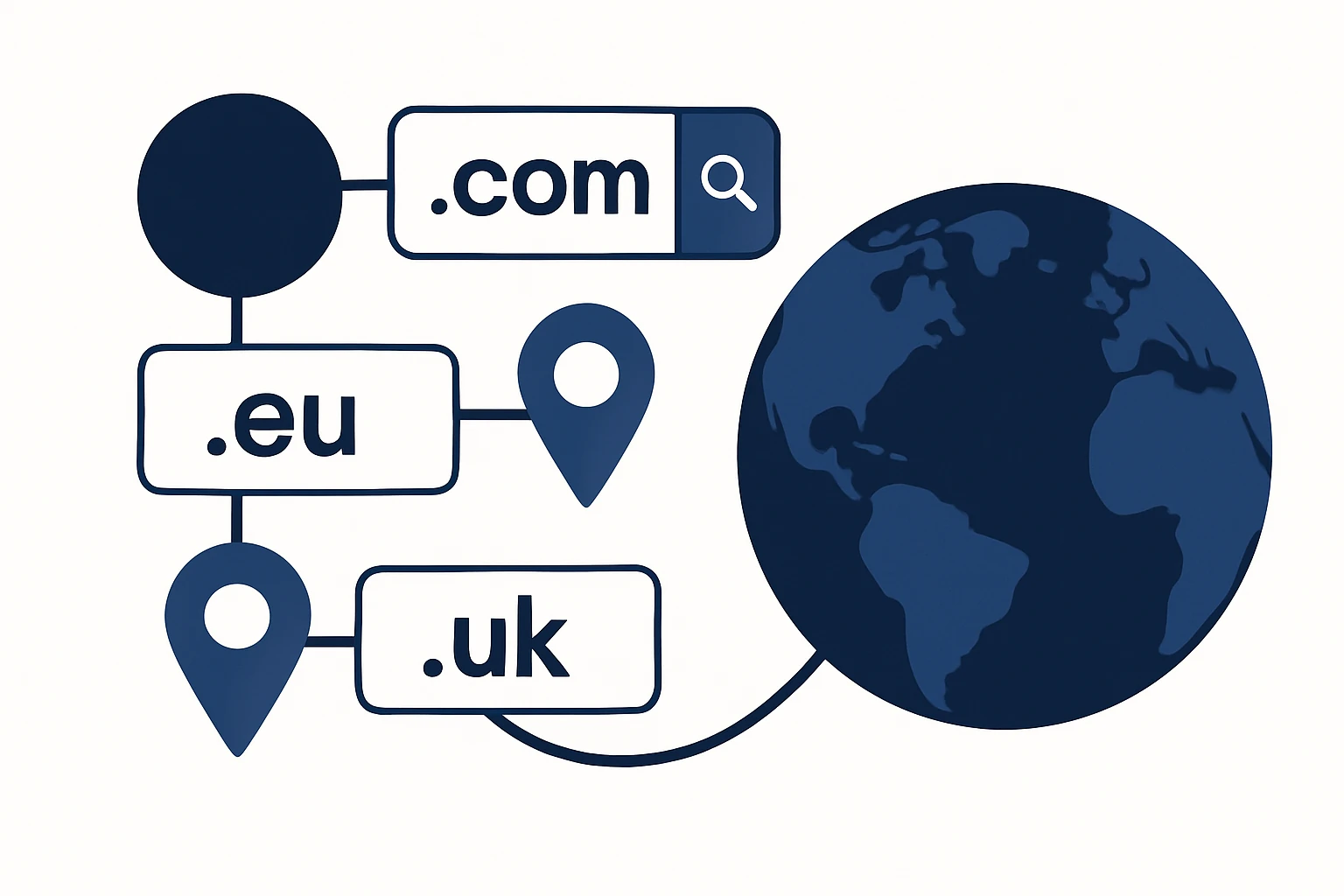
That said, extensions can influence perception and local intent. For example, country-code TLDs (ccTLDs) clearly signal a geographic focus and can aid local relevance signals when the target audience is concentrated in a specific country. Google’s guidance describes ccTLDs as signals of geographic intent that can help users in a given region, though they are not the only path to international reach. The decision to deploy ccTLDs should be weighed against the operational complexity of maintaining multiple domain ecosystems. Search Engine Land and Google’s own crawling/indexing guidance both point to this balance between branding perception and geographic signaling. Google Search Central.
Geo-targeting, localization, and the international perspective
Typically, brands that aim to serve multiple markets face a toolkit decision: use a single global domain with subfolders or subdomains, or acquire country-specific domains (ccTLDs) to signal localization. Google's guidance clearly indicates that for geo-targeting, ccTLDs are a viable option, but they require more setup and can transfer equity across distinct domain properties. Subfolders or subdomains tied to a single brand domain may simplify management and preserve authority, but they demand careful localization and hreflang strategies to avoid user and crawler confusion. In short, there isn’t a one-size-fits-all answer, the right choice depends on your organization’s capacity to manage multiple properties and your audience's expectations. Search Engine Land provides a nuanced view, while Google’s international guidelines emphasize that the domain extension is only one signal among many that shape international SEO performance. Google Search Central Blog.
A practical framework for US-based businesses: domain decisions in 3 steps
To help teams align domain strategy with product goals, branding, and technical execution, here is a concise framework you can apply during planning and architecture sprints. The framework is designed to be embedded within broader website development programs (including wordpress development services or shopify development agency engagements) and is suitable for teams delivering website maintenance services and ongoing performance optimization.
-
Step 1 - Brand-led naming and asset clarity:
Choose a domain name that communicates your value proposition, is easy to spell, and supports brand recall. Avoid overloading the name with hyphens or obscure abbreviations that slow down memorability or create misdirection in spoken-word references. A strong name reduces risk of brand confusion and supports consistent anchor text across link-building campaigns. See how the broader web development community weighs branding against keyword-driven domains in long-term planning.
-
Step 2 - TLD strategy aligned with audience and operations:
For many US-based brands, a traditional gTLD such as .com remains a default because of widespread familiarity and perceived credibility. If you’re expanding into a specific foreign market or serving bilingual audiences, ccTLDs or branded gTLDs can be considered as a branding signal or a regional flag. Importantly, do not rely on the TLD to improve rankings, instead, use the extension to support trust and clear expectations. The decision should be made in consultation with your product, marketing, and engineering teams to ensure the chosen extension scales with content governance and analytics. For a detailed read on how these decisions play with international reach, see the geo-targeting guidance and the international considerations in reputable industry coverage. Search Engine Land and Google Search Central.
-
Step 3 - Internationalization approach and ongoing maintenance:
Decide whether you will use subfolders/subdomains for international content or deploy separate ccTLDs for specific markets. Subfolders and subdomains let you leverage the equity of your primary domain but require disciplined localization workflows, language tagging, and hreflang configuration. If you choose ccTLDs, plan the governance and hosting strategy to manage multiple properties without fragmenting your brand’s digital presence. Regardless of approach, structure internal linking, navigation, and sitemaps to support crawlers and users alike. For organizations tracking a portfolio of domains or planning global campaigns, vendors like WebAtla offer domain portfolio insights and pricing options that can help you manage multi-TLD assets within a larger web development program.
Limitations, trade-offs, and common mistakes
Even with a clear framework, there are real-world constraints and pitfalls to watch for as you execute domain decisions within a broader web design and development program. A few key points:
- Overvaluing the TLD for SEO: As credible sources note, TLDs do not directly boost rankings. Focus on content quality, backlinks, and user experience instead. Search Engine Land and Google Search Central.
- Underestimating branding and trust: A familiar extension (like .com) often improves click-throughs and perceived credibility, which in turn influences user behavior signals that matter for long-term performance. The perception-edge should guide your approach, not a supposed SEO boost.
- Migration and canonical issues: If you relocate domains or consolidate properties, do not neglect 301 redirects, canonicalization, and informing search engines about the move. Google's guidance emphasizes proper domain migration practices to preserve ranking signals. Google Search Central Blog and Crawling and indexing FAQ.
- Localization complexity: Maintaining multi-regional content requires discipline in hreflang implementation and sitemap configuration to avoid crawl inefficiencies and user confusion.
Putting it all together: a disciplined path for US web teams
For teams delivering web development services across startups and enterprises in the US, the domain decision is a foundational ingredient in a broader performance and localization strategy. It’s not a one-off branding choice but a multi-year, cross-functional initiative that intersects with content governance, platform selection (for example, wordpress development services or shopify development agency engagements), and ongoing website maintenance services. When executed with a clear framework and aligned with technical SEO practices, your domain strategy supports not only branding and trust but also the technical clarity required for fast, accessible sites. A practical roadmap combines brand clarity, domain operations, and localization discipline to yield durable online presence for US audiences and beyond.
Conclusion
Domain strategy remains a crucial, practical lever for web development teams - not as a shortcut to ranking, but as a powerful signal to users and a cornerstone of how your site is organized, localized, and maintained. By prioritizing brand clarity, planning for internationalization with realistic resource constraints, and adhering to best practices for domain migrations and hreflang usage, US-based organizations can build websites that perform consistently in local and global contexts. Organizations that pair this discipline with robust performance optimization and technical SEO programs are best positioned to deliver high-quality, maintainable digital experiences. If you’re evaluating a broader domain portfolio or multi-TLD considerations as part of a larger web development initiative, consider using curated domain assets and pricing resources from trusted providers to streamline governance and budgeting. For more information on refresh or migration planning, or to explore a domain portfolio strategy as part of a development project, contact your preferred web development partner to discuss how a domain strategy fits into your overall roadmap.