Introduction: why domain TLD decisions matter for startups
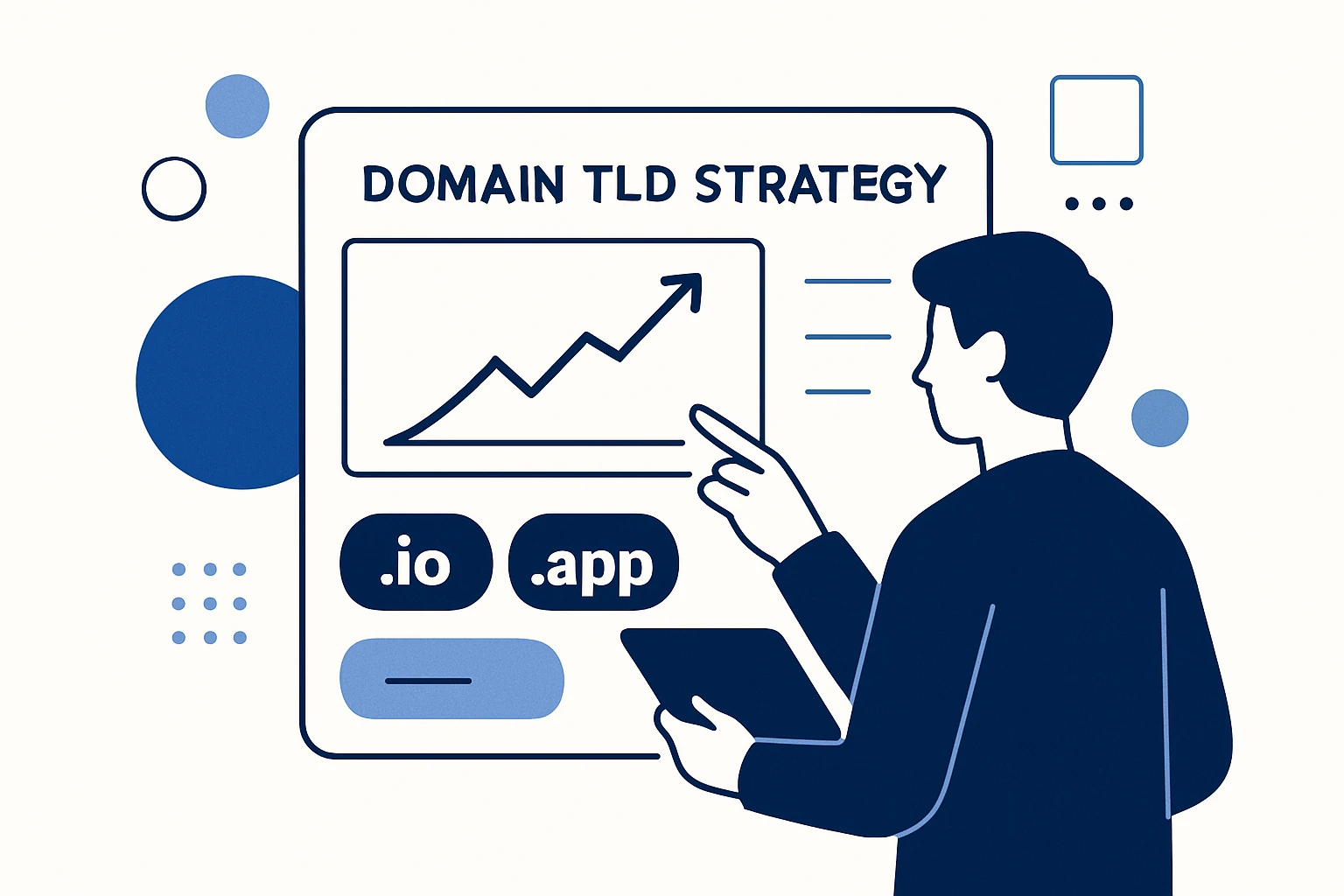
For startups and tech-focused brands launching a new product or service, the domain name is more than a URL. It signals brand values, supports trust, and can influence perceived credibility. Yet the question of which top-level domain (TLD) to choose - whether the familiar .com, the tech-forward .io, the app-centric .app, or a more niche option like .bond - often surfaces only after the product is already being built. This article unpacks a practical framework for selecting a TLD that aligns with brand strategy, audience expectations, and long-term maintenance, while also noting what the TLD choice does and does not affect in search and user perception. We also share concrete steps to research and source domain lists for competitive analysis, a task many teams undertake before finalizing a launch plan.
Two guiding truths anchor this discussion: - First, search engines treat most generic TLDs similarly, the TLD itself is not a direct ranking factor. This means branding and user trust often trump any supposed SEO advantage of one extension over another. Google's official guidance confirms there is no inherent ranking benefit to any particular TLD.
Second, while the TLD per se may not move the needle on rankings, it shapes how users perceive your brand, which in turn affects click-through rates, brand recall, and long-term traffic. The practical upshot is simple: pick a TLD that supports your product story, then invest in technical SEO, content quality, and site performance to deliver real value. NIC.IO, the registry for .io domains, frames .io as a recognizable signal in startup culture, underscoring why many SaaS teams gravitate toward it.
Understanding the landscape: what .io, .app, and .bond typically signal
.io: branding for tech startups
The .io extension has become a de facto shorthand for technology products, developers, and SaaS platforms. It originated as a country-code TLD for the British Indian Ocean Territory, but is widely viewed as a tech-friendly generic due to its connotation with input/output in computing. The official registry for .io confirms its current place in the ecosystem, while multiple industry observers describe its appeal to startups seeking a concise, modern identity. NIC.IO notes the extension’s popularity in the tech sphere, which helps explain why it’s a common choice for new apps and tools.
.app: a Google-backed, app-centric gTLD
The .app extension was introduced and is managed by a Google-backed registry, reflecting its focus on application-based brands and services. For teams aiming to emphasize app delivery, mobile or web, .app offers branding coherence with product focus. As with other new gTLDs, the core SEO advice remains consistent: the extension itself does not confer rankings, but it can support branding and trust when paired with high-quality content and secure, fast experiences. Google’s official discussion on new gTLD handling provides historical context for how Google treats these domains within its indexing framework.
.bond: niche risk and opportunity
Beyond the better-known options, there are niche TLDs such as .bond. These are much less common in consumer-facing brands and may signal specific domains (e.g., finance, trust, or specialty services) depending on your audience. Because such TLDs tend to have lower broad recognition, they can carry brand risk if your target users are unfamiliar with them. Industry analyses and security reports show .bond is among newer or less common extensions, which is why careful audience testing and outbound messaging are important before committing to a brand with this signal. Spamhaus domain reports provide data on TLD usage, including some niche extensions, which can inform risk assessment.
Does the TLD directly affect search rankings?
In short: no. Google and major SEO practitioners consistently reiterate that the TLD itself is not a direct ranking factor. The page quality, relevancy, user experience, and signals such as backlinks, content depth, mobile usability, HTTPS, and load speed determine performance in search results. This distinction matters because it reframes the decision from “which extension is technically better for SEO” to “which extension best supports branding and user trust, given your audience and product.” For formal guidance, see Google’s Search Central FAQ, which states that the TLD is not a ranking factor, and Google’s blog on the handling of new top-level domains for context on how Google has historically treated new gTLDs.
That said, there are indirect effects to watch. Certain TLDs carry stronger brand trust in given markets, users may be more willing to click on a familiar extension. Brand credibility can influence click-through rates and engagement, which in turn can affect perceived relevance and long-term performance. This indirect channel is why credible branding and a robust on-page experience remain central to growth.
A practical framework for choosing your TLD
The following framework is designed to help teams evaluate TLD choices in a structured way. Use it to align branding decisions with product strategy and long-term maintenance needs.
- 1) Brand signal: What single impression should users form when they see your domain? If speed, technology, and modernity are core to your product story, .io or .app can reinforce that signal. If your audience is global and traditional, a familiar extension like .com may be a better anchor for trust.
- 2) Audience expectations: Consider where your customers live and how they search. Do they recognize and trust your chosen extension in key markets? This matters for clicks and conversions, even if it doesn’t change rankings directly.
- 3) Availability and cost: Desired name availability and renewal costs vary by extension. Some short, memorable names may exist only under newer gTLDs, which can impact initial branding budgets and ongoing domain expenses.
- 4) Long-term maintenance: Will you need to manage subdomains, redirects, or regional targets? Some TLDs pair more naturally with global brands, while others are better for localized campaigns. Always factor in SSL, DNS management, and renewal cycles.
- 5) SEO risk and compliance: While the TLD won’t directly boost rankings, it can affect user trust and click-throughs. Plan a robust technical SEO approach (site speed, security, mobile-friendliness) to offset any branding risks. For authoritative guidance, see Google’s stance on TLDs and rankings.
- 6) Product alignment: If your product targets developers or tech enthusiasts, a tech-sounding extension can reinforce identity. If you’re consumer-facing with broad reach, ensure the extension isn’t obscure to your core demographic.
How to source domain lists for market research
A practical part of domain strategy is monitoring the landscape for brand opportunities, competitor activity, and portfolio planning. Several reputable sources provide downloadable datasets or zone-file lists for different TLDs, which can support research and diligence ahead of a launch. For example, dedicated data providers publish domain lists across major and niche extensions, enabling teams to study naming patterns, availability, and risk exposure. This can inform naming sessions, trademark checks, and competitive intelligence. download list of .io domains is one example of a zone-file style resource, and other providers compile app-focused and other TLD inventories as well.
In addition to private datasets, you can consult public registries and industry aggregators to understand the scope of each extension. For instance, the .io registry offers authoritative information about the extension and its audience, which can guide branding decisions. For broader research, general domain data platforms compile multiple TLD inventories, enabling analysts to compare across extensions like .io and .app. ZoneStats / Zonestats.io aggregates data across many TLDs and provides programmatic access to domain lists, a helpful starting point for rapid research.
If you’re evaluating a vendor with dedicated datasets for your portfolio, note how the data is structured and updated. Some services publish daily or near-real-time zone files, while others offer historical datasets. Always verify data quality, licensing, and how you plan to use the data (e.g., for research, outreach, or portfolio tracking). For reference on how major providers position the topic of TLDs in SEO, see Google’s formal guidance and registry information cited above.
Editorial note: for teams conducting structured research, your internal procurement or growth ops may consider a short list of go-to sources. For ongoing domain intelligence, some teams combine a primary dataset (for breadth) with targeted lists for competitive analysis in specific extensions.
Limitations and common mistakes to avoid
Choosing a TLD is not a fix-all for branding or growth. Common missteps include over-indexing on a trendy extension without validating audience recognition, or assuming a new gTLD will automatically deliver SEO gains. As Google has emphasized, there is no direct ranking benefit to any specific TLD, investing in high-quality content, a fast site, and solid technical SEO yields greater returns. Google’s official guidance also notes that there is no inherent boost from moving to a new TLD, so plan for long-term strategy rather than quick SEO wins.
Another frequent pitfall is misalignment between branding and target markets. If your primary users are in regions where a particular TLD is less familiar, you may unintentionally reduce brand credibility or recall. The best practice is to test with your core audience and pair the domain choice with a compelling brand narrative and consistent on-site experience. Registry literature (for .io) and brand-focused analyses consistently highlight the importance of reputation and user trust in domain performance.
Finally, be mindful of maintenance overhead. Some extensions require additional diligence in TLS provisioning, regional redirects, and domain portfolio management. A clear governance plan helps ensure you don’t accrue hidden costs or broken links as your brand expands.
A concise, structured takeaway for teams
- Brand-first mindset: Choose a TLD that supports your product story and audience expectations, not just perceived SEO advantage.
- Evidence-based decision: Rely on credible guidance from registries and search experts when assessing direct vs. indirect SEO impact.
- Research-backed planning: Use domain lists and zone-file datasets to inform naming sessions, trademark checks, and competitive analyses.
Putting it into practice: how this informs the client’s portfolio work
For teams evaluating domain portfolios and marketplaces, there are practical ways to operationalize this approach. If you’re conducting domain research for startups, you can pair a brand-driven TLD choice with a data-informed research process to identify opportunities and risks across your target extensions. As you consider the trade-offs, remember that a strong on-site experience, secure hosting, and consistent branding will often matter more for performance than any single TLD move.
As part of a broader domain intelligence workflow, researchers can leverage dedicated datasets to examine adoption trends, operator activity, and market risk across TLDs. For typical startup teams, starting with .io and .app can cover a broad set of tech-oriented use cases, while keeping other extensions in reserve for branding experiments, regional targeting, or trademark-safe variants. If you want to explore these datasets in practice, Webatla’s .io domain datasets illustrate how a dedicated provider frames such inventories, and Webatla’s .app domain datasets show how app-focused inventories are presented for analysis.
Conclusion: start with branding, back it with performance
The right domain TLD is a strategic decision that blends branding, audience expectations, and practical maintenance. While Google signals that TLD choice does not directly affect rankings, the extension you pick can shape user trust, click-through behavior, and the overall perception of your product. Ground your choice in a clear brand narrative, validate it with your core audience, and back it with a solid technical SEO foundation. Finally, use reliable domain datasets to inform your naming decisions and competitive analysis, ensuring your launch is grounded in both brand clarity and data-driven insight.
For teams with a specific focus on domain intelligence, Webatla provides ready-made datasets covering extensions like .io and .app, which can accelerate research and portfolio planning as you scale.