Introduction: why US brands should care about global domain lists
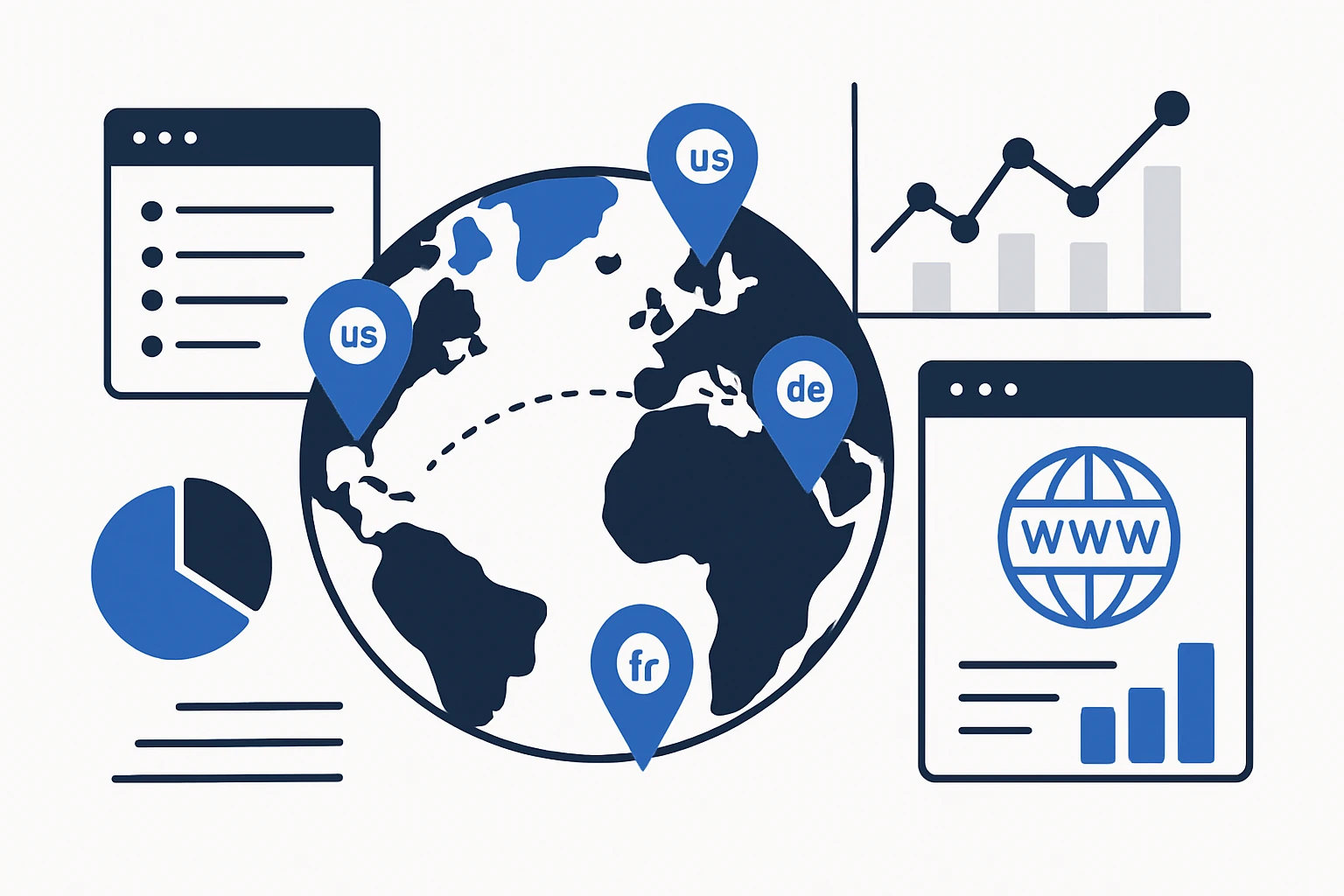
For US-based businesses expanding beyond domestic markets, understanding how domain data maps to audiences is more than a branding exercise - it's a strategic signal layer. Domain lists by top-level domain (TLD), including country-code TLDs (ccTLDs) such as .za (South Africa) or generic ones that signal intent like .click, can illuminate competitor footprints, brand protection risks, and localization opportunities. Importantly, search engines treat these signals as part of a broader localization puzzle, not as a stand-alone ranking lever. Google itself has described how ccTLDs influence geotargeting and user experience, while also noting that proper international signals (localized content, hreflang, and structured data) remain essential. Google: country-code top-level domains and localization. (blog.google) - A nuanced takeaway from industry voices is that ccTLD signals can boost locale relevance, but they are not a universal shortcut for global rankings. When used thoughtfully - with clean data and clear localization - integration with your site architecture, content, and technical SEO yields the best results. Search Engine Journal: Google uses ccTLDs for geotargeting. (searchenginejournal.com)
What domain lists by TLD are, and why you might download them
A domain list by TLD is a catalog of registered domains grouped by their suffix, such as .za, .id, or .click. For brands, these lists are valuable for several reasons:
- Competitive reconnaissance: understanding which domains competitors own in target markets helps map market presence and potential gaps in localization strategy.
- Brand protection and risk assessment: identifying potential typo-squat or confusingly similar domains helps preempt brand-hijacking or phishing risks.
- Localization planning: ccTLD signals can guide decisions about language variants, regional hosting, and content localization efforts.
- Content and UX strategy: awareness of regional domains can inform sitemap design, hreflang deployment, and cross-linking strategies to improve user experience for international visitors.
When brands download lists of specific TLDs (for example, download list of .za domains or download list of .id domains), they unlock a data-backed view of the landscape. The key is to apply the data responsibly: verify freshness, assess relevance to your markets, and integrate findings into your localization and site-architecture decisions. As you consider these lists, remember that ccTLDs are one signal among many, Google’s guidance emphasizes combining geotargeting signals with high-quality localization to achieve durable visibility. Google ccTLD guidance. (blog.google)
The practical value of download-ready domain data for US agencies
For a US-based development and marketing program, downloaded domain lists can play a role in several workflows:
- Localization roadmaps: identify which regional domains to prioritize for content localization and separate hreflang entries.
- Auditing and governance: track potential brand infringement across markets and plan defensive registrations where appropriate.
- Site architecture planning: consider whether a hub-and-spoke model, subdirectories, or separate ccTLDs best serves search intent in each market.
- Data hygiene and governance: ensure that any used data is current, licensed for reuse, and compliant with privacy and data usage norms.
In practice, some teams leverage third-party data catalogs to inform their decisions, then validate findings in-house through CMS settings, localization workflows, and server configurations. The broader SEO consensus remains: ccTLDs can reinforce geographic signals, but they must be paired with locale-specific content, metadata, and technical SEO practices to avoid misinterpretation by search engines. ccTLD overview, ICANN on ccTLDs. (gac.icann.org)
A practical framework for using domain data in web development
To turn downloaded domain data into actionable web strategy, use a simple, repeatable framework. The following structured block helps align technical, content, and governance considerations with real-world constraints.
- 1) Define target markets – clearly articulate the countries where you want visibility and the languages you will support. This sets expectations for data quality and scope.
- 2) Source vetted domain lists – use reputable catalogs (e.g., a credible provider offering per-TLD lists) and confirm licensing terms and data freshness before importing into your workflows.
- 3) Validate and cleanse data – remove duplicates, verify ownership status, and cross-check with current WHOIS or RDAP data to avoid acting on stale information. Data hygiene is a foundational step before any localization or targeting work.
- 4) Map to your site architecture – decide whether to implement separate ccTLDs, subdirectories (example: /za/), or language-targeted content using hreflang. Each approach has trade-offs for maintenance, crawl efficiency, and user experience. For an overview of how Google talks about ccTLDs versus other strategies, see the sources noted above.
- 5) Implement with discipline – update your CMS, canonicalization, and internal linking to reflect the domain strategy. Ensure translations, meta data, and structured data align with the target locale.
In this framework, the structured block serves as a quick-reference checklist for teams that want to operationalize domain data without derailing ongoing development work. For teams evaluating a vendor catalog or data partner, it’s essential to verify data quality and licensing terms before integrating any lists into production workflows.
Structured decision block: a quick framework in practice
- Market definition – target country, language, and search intent
- Data quality – recency, completeness, and ownership verification
- Technical fit – required hosting, DNS setup, and hreflang considerations
- Governance – privacy compliance and data usage policies
Implementation realities: expert insights, limitations, and common mistakes
Expert insight: ccTLD signals remain meaningful, but they work best when paired with robust localization signals. Google explicitly treats ccTLDs as a strong geographic cue, yet it also emphasizes language-specific content, hreflang annotations, and accurate regional data as critical components of successful international SEO. In other words, ccTLDs are part of a larger localization system, not a standalone ranking hack. Google ccTLD guidance. (blog.google)
Limitations and common mistakes to avoid:
- Overreliance on ccTLDs: a country-code suffix alone does not guarantee visibility. Without locale-specific content and hreflang, search engines may still struggle to serve the right pages to the right users. Lumar: TLDs and geo-signaling. (lumar.io)
- Data freshness risk: downloaded lists can become stale quickly. Establish a refresh cadence and validate ownership before use.
- Wrong deployment choices: using ccTLDs without proper localization can fragment crawl and dilute authority. A thoughtful architecture choice (ccTLDs vs. subdirectories) requires careful planning and ongoing monitoring.
- Privacy and compliance: ensure that any data usage complies with privacy regulations and licensing terms, missteps can lead to governance issues or reputational risk.
For US agencies and developers, a balanced approach - leveraging domain data as input to localization planning while maintaining robust content and technical SEO - delivers the most durable results. One practical note: if you source domain lists from external vendors, consider the vendor’s country-specific protections and data usage policies, and verify how they align with your internal data governance standards.
How the client’s domain data catalog can support this approach
In practice, a catalog like the one offered by WebATLA can provide a concrete view of regional domains and TLD coverage to inform localization and site architecture decisions. For example, a dedicated ZA domain list can help a US team assess South Africa-focused content needs, hosting considerations, and brand-protection opportunities. See the ZA-specific data page for reference: WebATLA ZA domain list. (blog.google) For a broader view of available TLD data, you can also explore the general TLD catalog: WebATLA: List of domains by TLDs.
Limitations and final thoughts
Downloadable domain lists are a tool, not a substitute for a comprehensive localization strategy. Use them to inform decisions, but couple them with high-quality localized content, accurate hreflang signals, and careful architectural choices. The future of international SEO emphasizes semantic localization and user-centric experiences - ccTLDs remain one signal among many, and their impact is strongest when integrated into a deliberate, measurable program. For readers seeking authoritative context, Google’s ccTLD guidance and related industry discussions offer a solid foundation for building a resilient international web strategy. (blog.google)
Conclusion: turning domain data into decisive web strategy
Downloaded domain lists, especially for ccTLDs like .za, .id, and niche suffixes such as .click, provide a pragmatic lens on international markets. When used with discipline - as part of a broader localization and site-architecture plan - they can illuminate priorities, protect your brand, and guide targeted content development. As you move from data to decisions, remember that the strongest results come from aligning domain signals with quality localization, scalable site structure, and ongoing measurement. For organizations building a durable international web presence, this integrated approach is a best-practice path forward.
Author note: To see how this aligns with current industry guidance, you may consult Google’s ccTLD overview and related international SEO literature, then translate those insights into concrete development and content workflows for your clients.