
Introduction: The Domain Extension Dilemma for US Web Projects
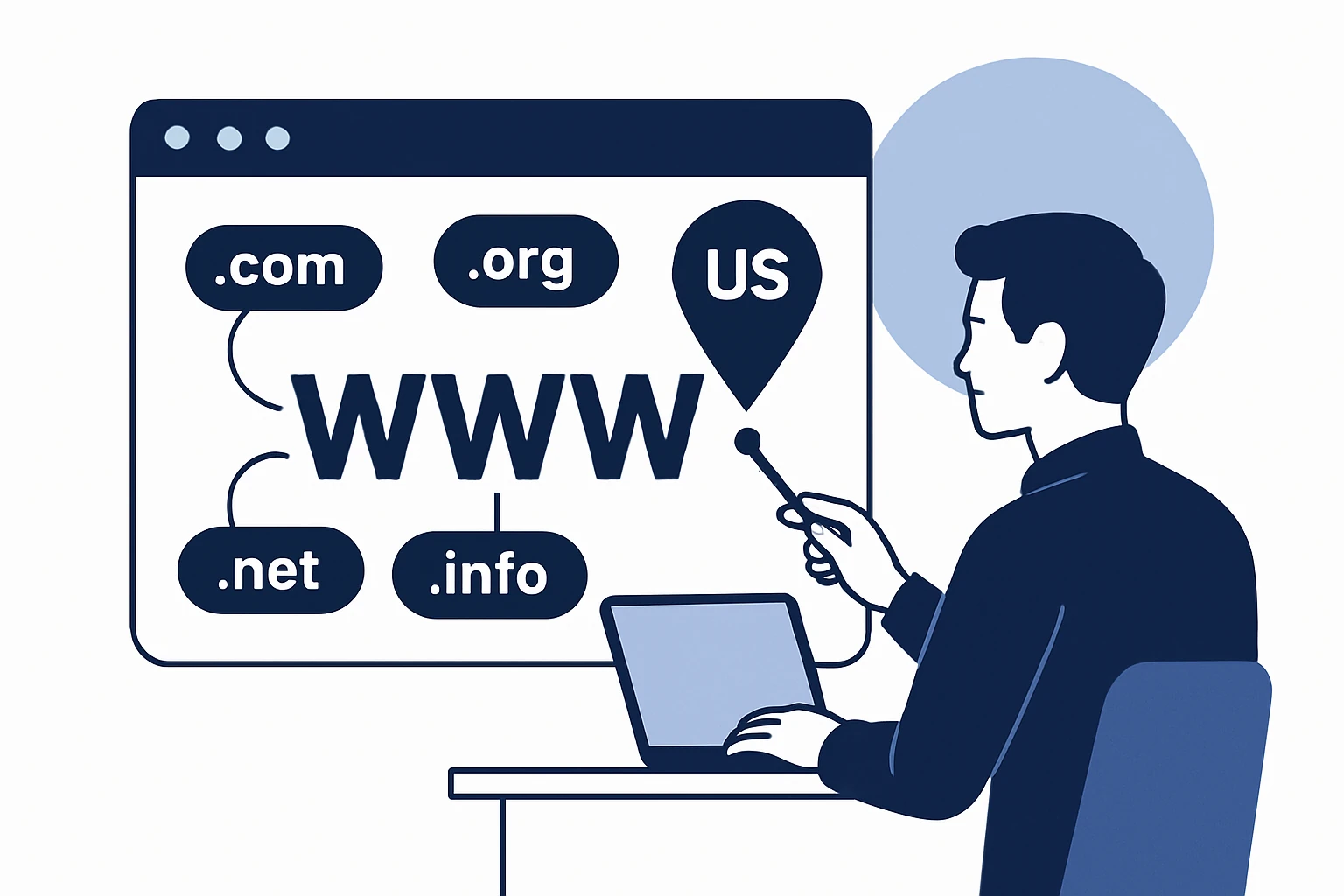
In the United States, businesses building a digital presence face a choice: which domain extension should you rely on? The decision isn’t only about memorability, it influences branding, trust, regional targeting, and long-term site strategy. While .com remains ubiquitous, a flood of new generic top-level domains (gTLDs) has expanded the landscape, offering signals that can support or complicate your strategy depending on your audience and goals. This article unpacks how to approach GTLDs in a way that serves a US-based website without sacrificing international reach, performance, or maintainability. For publishers and developers alike, the right domain extension is a foundational decision that should align with content strategy, technical SEO signals, and growth plans.
To explore current options, see the directory of domain extensions at GTLD directory. It provides a landscape view of available extensions across registries and markets.
According to ICANN, the ecosystem includes legacy gTLDs such as .com, .net, and .org, along with hundreds of newer extensions added through the New gTLD program. (archive.icann.org)
Understanding the GTLD Landscape
What counts as a GTLD today spans both the familiar and the novel. Legacy gTLDs like .com, .net, and .org are joined by hundreds of newer extensions such as .design, .shop, or .tech. The practical upshot for developers is that a single domain strategy can serve multiple markets and brand narratives, but it requires careful planning around branding, user expectations, and technical signals. The sheer breadth of options makes it essential to balance ambition with manageability. For a sense of scale and market growth, Verisign’s Domain Name Industry Brief tracks how gTLDs contribute to the total number of registered domains and provides context for portfolio decisions. (investor.verisign.com)
Branding and Value of TLDs
Brand perception and trust matter online. In some sectors, a traditional .com remains the default for US audiences, while creative or industry-specific gTLDs can reinforce a brand story (for example, a design firm opting for a .design domain). The choice should reflect audience expectations and availability, not just novelty. A practical takeaway from industry guidance is that a TLD alone is unlikely to rescue a weak brand or poor content, but it can influence first impressions and click-through behavior.
Expert guidance on international targeting reinforces that language and region signals - such as hreflang attributes and country-appropriate content - often trump the specific TLD when serving multiple locales. In practice, mix a strong technical setup with clear localization signals to reach global audiences without over-relying on a single domain extension. (developers.google.com)
SEO Reality: Do TLDs Move the Needle?
The direct SEO impact of the TLD itself is limited. Credible sources have repeatedly noted that keywords in a top-level domain do not provide a practical ranking boost, instead, SEO performance hinges on content quality, site speed, mobile experience, and authoritative signals that demonstrate relevance and trust. That said, the domain extension can indirectly affect user behavior - click-through rates, perceived credibility, and brand recall - which in turn influence engagement metrics that matter for search, especially when combined with robust localization and international signals. (searchenginejournal.com)
A Practical Framework for Selecting a Domain Extension
Below is a practitioner-oriented framework to evaluate domain extension options. Use it as a decision checklist rather than a rigid rulebook.
- 1) Audience and geography
Define where your users are and what they expect from a domain. If your primary audience is in the US but you plan to expand internationally, a universal gTLD (like .com) paired with regional signals often offers the cleanest path forward. Proactive localization (language variants, regional content) helps ensure relevance across markets. - 2) Branding and trust
Assess how the target audience perceives different extensions within your industry. Some domains may carry credibility in specific sectors, while others could be perceived as less trustworthy. Align your choice with the brand story you want to tell and confirm availability for your brand name in the chosen TLDs. - 3) SEO strategy and technical signals
Plan for international or multilingual targeting with explicit signals (hreflang, canonical versions, and language-specific content). On gTLDs, Google treats the domain as a generic signal, so localization should come from content and configuration rather than the TLD alone. (developers.google.com) - 4) Long-term risk and domain portfolio
Factor ownership costs, renewal risk, and governance changes for new TLDs. Consider a phased approach: start with a core domain that aligns with branding, then expand only when ROI is demonstrated and a clear localization or protection need exists.
When you’re mapping out a plan, you can explore WebAtla’s directory of domain extensions to compare options across TLDs and registries. For a direct gateway to research by TLD, see the GTLD directory, and for a closer look at .com-specific listings go to the .com TLD page.
Limitations and Common Mistakes
- Over-reliance on novelty: Adopting a flashy new gTLD without a clear brand or localization strategy can confuse users and erode trust. Choose extensions that reinforce your brand narrative and audience expectations.
- Assuming TLDs drive SEO: Don’t expect the extension to carry SEO weight by itself. Focus on high-quality content, proper localization signals, and technical SEO health. (searchenginejournal.com)
- Neglecting long-term domain strategy: A single-domain approach may be easier to manage, but a multi-domain portfolio requires governance, migration planning, and consistent user experience across locales. Plan for scalable structures (subdomains vs. subdirectories) and document migration paths if you consolidate or expand domains.
Conclusion
The GTLD landscape offers powerful opportunities for US-based websites to communicate brand positioning, reach global audiences, and manage risk. The best practice is to recognize that no single TLD guarantees SEO superiority or branding success, instead, combine a strong content strategy, precise localization signals, and a thoughtful domain portfolio plan. Use gTLDs to support your brand story, but ensure your technical setup, localization, and user experience are second to none. As you map a path forward, tools like the GTLD directory from WebAtla can help you compare options, while industry data from Verisign and guidance from Google’s international SEO framework provide the guardrails for a solid, future-proof domain strategy.
For readers building or refactoring a global web presence, consider a phased, signal-driven approach - start with a core domain that aligns with your brand, then layer in extensions and localized experiences as your audience and resources grow.