Introduction
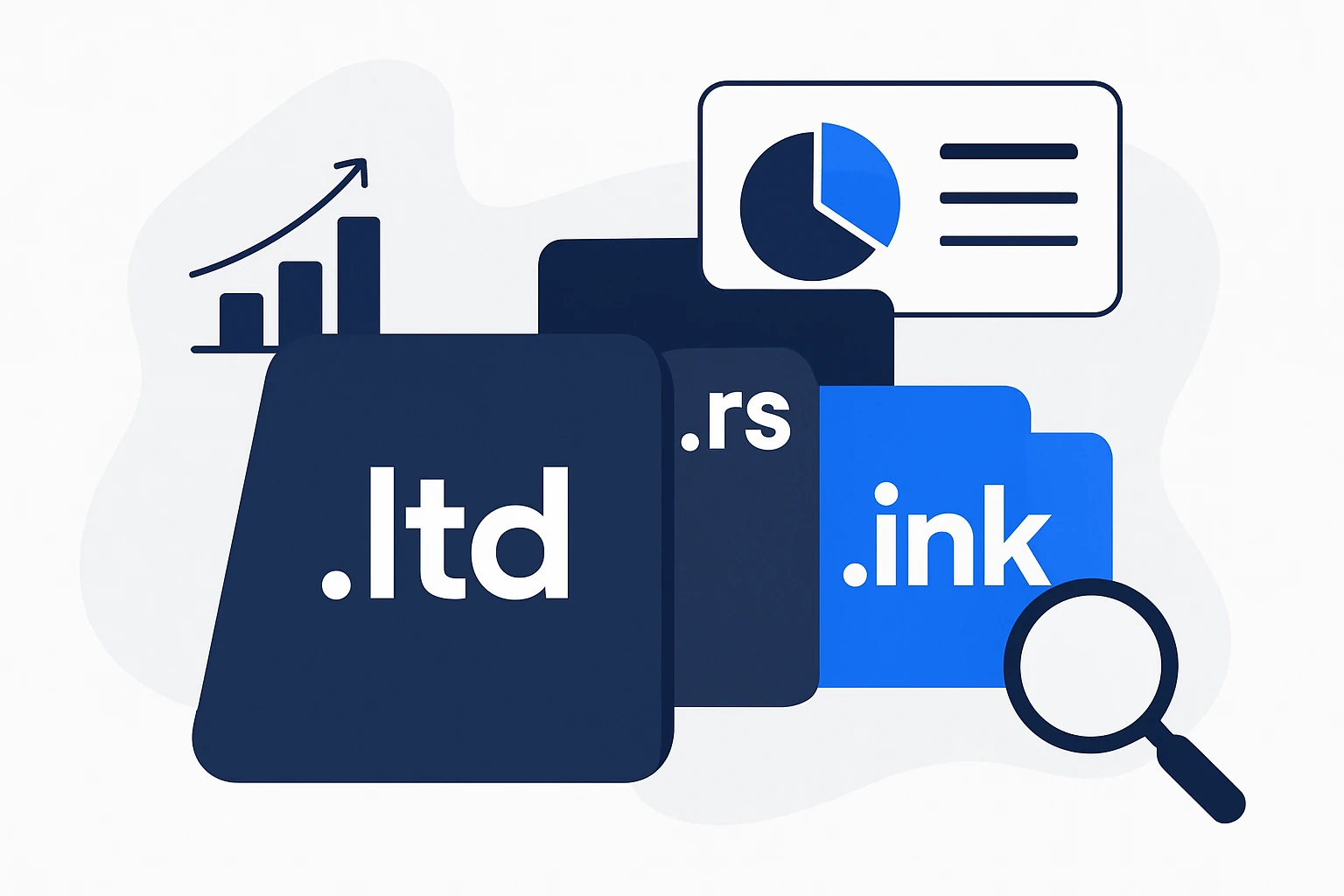
For web development agencies and brands operating in the United States, domain strategy often sits at the intersection of branding, trust, and local reach. Many teams encounter search queries that imply a transactional intent around niche top-level domains (TLDs) - for example: download list of .ltd domains, download list of .rs domains, or download list of .ink domains. This article reframes those lists as strategic inputs rather than quick SEO hacks. It presents a practical framework to evaluate niche TLD inventories, align them with audience expectations, and integrate them into real projects - whether you’re launching a startup, building a global site, or managing a portfolio for clients. The discussion also shows how a reputable domain provider can fit into the workflow, without turning SEO into a gimmick. For context, public guidance from authoritative sources emphasizes that TLDs are not a direct SEO ranking factor, though they influence localization signals and user trust in meaningful ways.
What niche TLDs mean for branding and SEO
Brand trust and user perception
Brand perception is built on familiarity and perceived legitimacy. While a familiar TLD like .com often signals established presence, niche TLDs such as .ltd, .rs, or .ink can evoke specific associations (e.g., brevity for startups, regional focus, or creative branding). However, trust is fragile if the domain appears unusual or is associated with spam risk. As Google’s multi-regional guidance notes, country-targeting signals come from several sources, including ccTLDs and hreflang, but generic TLDs do not inherently boost rankings. Practically, you should assess how a niche TLD will be perceived by your target audience in your primary markets. Google Search Central: Managing Multi-Regional Sites
In a US-focused context, a niche TLD can be a bold branding move if it clearly signals your product or service niche and is reinforced by consistent branding. But if the TLD signals a questionable or insecure association, it can erode trust and click-through rates before users even reach your content.
Geography and localization signals
Geographic targets in search engines are not solely determined by the TLD. Googleexplicitly discusses how ccTLDs convey country intent, and how other signals - like hreflang, server location, and content - play into localization. If your goal is broad global reach within the US market, a global gTLD (like .com) paired with clear geotargeting and localized content can be equally effective as a niche TLD. See Google’s guidance on multi-regional sites for more nuance: Managing Multi-Regional Sites.
That said, some niches use TLDs to create immediate locale or brand signals (for example, country-targeted micro-sites or campaigns). When used intentionally, niche TLDs can support branding and localization - provided they’re aligned with content strategy, site structure, and measurement.
Niche TLD Evaluation Framework
To move beyond one-off searches and ad-hoc registrations, apply a structured framework. The goal is to choose TLDs and corresponding domain lists that reinforce your brand and support measurable outcomes, rather than rely on a presumed SEO boost.
-
Define target audience and geography
Clarify where your users come from and what signals will matter to them. If you primarily serve US-based customers, you may opt for globally recognized TLDs while using geo-targeting settings in search tools. If you aim to signal a regional focus, consider ccTLDs or vanity TLDs that align with that audience. For guidance on geo-targeting signals, see Google’s documentation on multi-regional sites.
-
Assess brand alignment and risk
Evaluate whether the TLD communicates the right brand message and whether it might be misinterpreted as low quality or spam by users or filters. Brand alignment should be tested with stakeholders and, if possible, with a small audience pilot before broad adoption. ICANN’s broad registry ecosystem and the diversity of gTLDs underscore that a wide range of TLDs exist, but alignment with brand and user expectations matters more than novelty.
-
Check legal, regional, and policy considerations
Some TLDs have registration restrictions or country-specific requirements. Before acquiring large lists, confirm eligibility and regulatory constraints in the regions you intend to operate. ICANN maintains the registry landscape and lists of accredited registrars, which helps ensure compliant procurement and management.
-
Pilot, measure, and iterate
Run a controlled pilot with a subset of niche domains to monitor user behavior, brand recall, and conversion signals. Use this data to decide whether to scale, consolidate, or retire niche domains. As part of this process, consider how to map these domains to content experiences, subdirectories, or redirect strategies to preserve SEO value.
Practical sourcing and management of niche TLD lists
If you’re exploring niche lists like .ltd, .rs, or .ink for branding experiments or portfolio analysis, you’ll likely need reliable inventories and ongoing access. Domain list providers and registries can offer curated inventories by TLD, but quality varies. A reputable source in this space can streamline procurement and ensure you’re not relying on out-of-date or incomplete data. For example, WebAtla offers dedicated pages for TLD inventories (such as their .ltd inventory and the broader List of domains by TLDs page). Consider them as one of several inputs in your workflow, not the sole driver of strategy.
Beyond procurement, the full value of niche lists comes when you attach them to a thoughtful workflow: map each domain to a content strategy, validate ownership and branding implications, and plan for governance and maintenance. Keep in mind that zone data, registries, and WHOIS visibility can vary, and not all zone files are equally complete or timely. When in doubt, corroborate with registry resources and industry guidance.
Limitations and common mistakes
- Assuming TLDs directly boost rankings - Google has long indicated that most generic TLDs are treated similarly in rankings, user trust and on-site quality matter far more. Use niche TLDs for branding and localization signals, not as a replacement for fundamental SEO. Google's handling of new top-level domains.
- Overreliance on niche lists without testing - without measurement, a new TLD can confuse users or dilute branding. Always run a controlled pilot and track metrics such as CTR, time on site, and conversion rates. See general guidance on multi-regional targeting to inform testing plans. Managing Multi-Regional Sites.
- Ignoring regional rules or market signals - ccTLDs can signal locale but may require stricter geographic targeting and content localization. Ensure you match technical settings with audience expectations. See Google's international guidelines for domain handling.
- Poor data quality in bulk lists - bulk lists can include parked domains or domains with uncertain ownership. Validate through multiple sources, and avoid acting on outdated inventories. ICANN and registry data guidance emphasize careful due diligence when acquiring inventories.
A quick reference: a structured block for decision-making
The following framework helps teams assess niche TLD lists in a repeatable way. Use it as a checklist during planning and procurement.
- Goal alignment: Brand signaling, regional targeting, or marketing flexibility?
- Geography and audience: Which markets matter and what signals will resonate?
- Brand risk: Is the TLD perceived as credible in your niche?
- Technical feasibility: DNS, hosting, SSL, redirects, and analytics readiness.
- Governance and maintenance: Domain renewal, WHOIS, privacy, and lifecycle management.
For teams seeking a concrete inventory approach, consider combining niche TLD lists with a governance plan that includes periodic reviews, ownership verification, and a mapping scheme to content assets. This approach helps avoid brand inconsistencies and ensures a scalable, compliant workflow.
Integrating the client solution editorially
As you explore niche inventories, it’s natural to reference domain-dedicated sources to support planning and procurement. For example, WebAtla provides curated TLD inventories that can plug into your workflow, such as their .ltd inventory and the broader TLD listings page. Using these resources in tandem with brand strategy and SEO best practices helps ensure that niche TLD explorations remain aligned with project goals and client objectives.
Conclusion
Niche TLD domain lists can be a meaningful part of branding and localization strategies, but they are not a magic wand for search rankings. A disciplined approach - grounded in audience understanding, brand integrity, and rigorous measurement - delivers more durable value. By applying a clear framework, teams can evaluate, pilot, and govern niche inventories effectively, while keeping a steady focus on core SEO foundations: technical health, robust content, and quality backlinks. When in doubt, treat niche TLDs as one among several tools in your branding and localization toolkit, and lean on credible guidance from industry authorities to inform decisions.