Introduction: why domain lists matter in a global web strategy
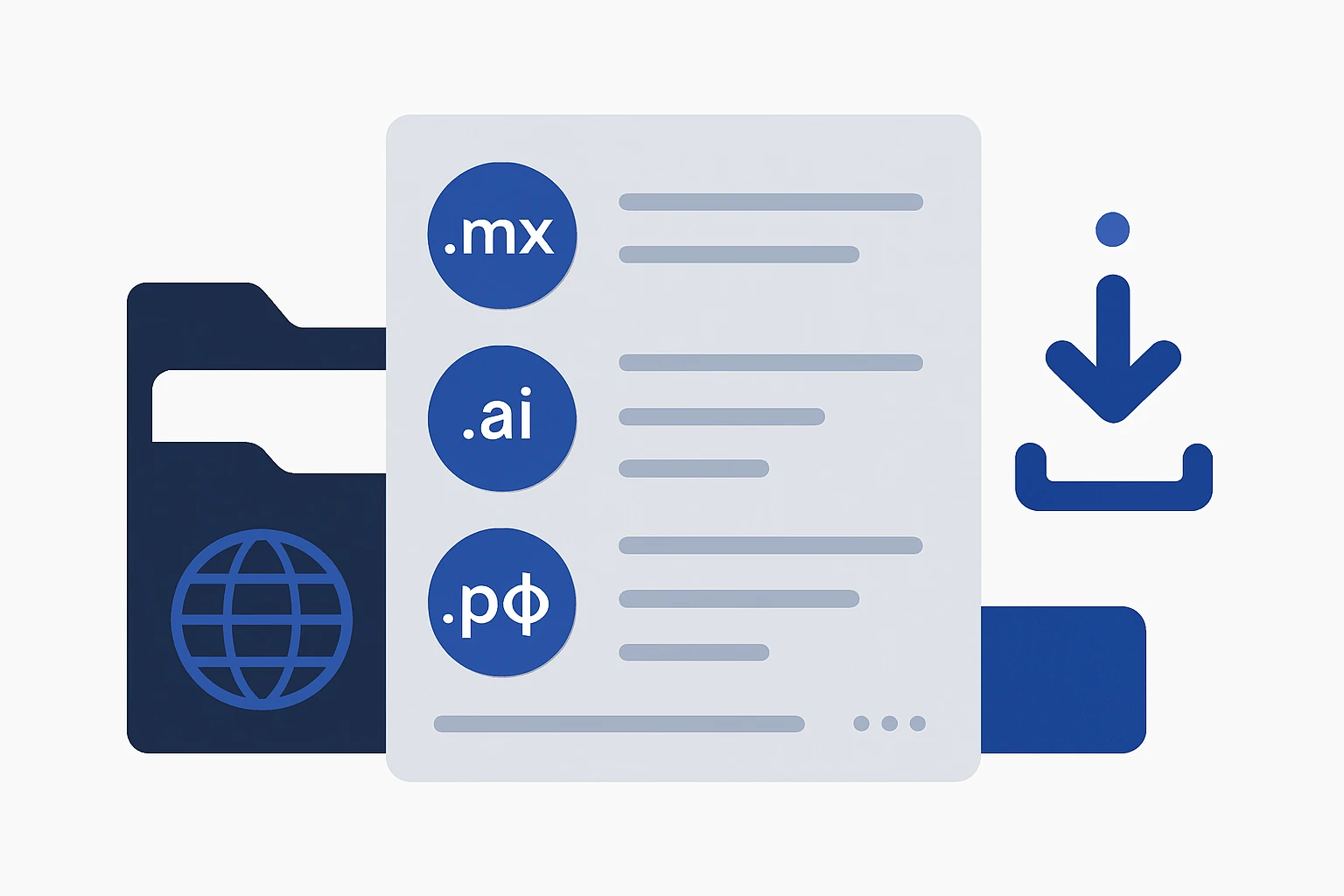
For a US-based web development agency serving startups and enterprises with global ambitions, understanding the digital footprint of international markets is as important as optimizing a site for performance. Domain data - especially bulk lists drawn from country-code top-level domains (ccTLDs) such as .mx (Mexico), .ai (Anguilla), and .рф (Russia, punycode xn--p1ai) - can illuminate regional branding opportunities, partner ecosystems, and potential markets worth prioritizing in product roadmaps. But bulk access to ccTLD zone data is not uniformly available, and the landscape is governed by rules that vary by registry, with significant consequences for legality, accuracy, and usefulness. This guide walks through what you can legally obtain, what you should expect from different data sources, and how to integrate domain data into web development and SEO decisions without overstepping boundaries.
Understanding the data landscape: zone files, access realities, and what’s actually available
Two core ideas shape how you approach domain data today. First, zone files are the authoritative lists of active domains in a given zone and are a primary source for bulk domain data. Second, not all registries provide these files publicly or freely. ICANN’s Zone File Access program historically required registries to offer bulk access to zone data for approved purposes, mainly for research, security, and domain analytics, typically through a centralized portal or direct registry agreements. However, many ccTLDs do not publish zone files at all, or restrict access to licensed partners. This reality has driven a split in the market between (a) gTLDs (like .com, .net) which commonly offer bulk access via CZDS, and (b) ccTLDs (like .mx, .ai, .рф) where access is far more variable. For context, ICANN maintains guidance about zone file access and the CZDS mechanism that governs bulk downloads for participating gTLDs, registries may still require their own agreements for non-gTLDs. (icann.org)
In practice, most ccTLD registries do not publish zone files publicly. A comprehensive industry view from DomainZones.io notes that the majority of ccTLDs do not provide direct zone file access, which pushes practitioners toward alternate data sources, licensing arrangements, or selective, registry-approved access. This reality is echoed by other market observers and data providers that aggregate or license domain lists, rather than export complete ccTLD zone files themselves. (domainzones.io)
Where ccTLD access exists, it is often tightly controlled. For example, RU-CENTER, the primary registry for .ru and .рф in Russia, maintains a policy that the zone is updated on a defined cadence (the .рф zone, in particular, is updated hourly in some contexts) and access to the zone file requires engagement with the registry or an approved data provider. This underscores a key practical point: cadence, coverage, and licensing all shape the value you can extract from domain lists. (nic.ru)
For Anguilla’s .ai, the registry’s own guidance shows the importance of compliance and governance around domain data, and it highlights that abusive use is a major concern that registries actively police. The .ai ecosystem thus presents both branding value and data-access considerations, particularly for teams evaluating how to source and use domain lists responsibly. (nic.ai)
What .mx, .ai, and .рф data can and cannot tell you about markets
Domain lists, when available, are more than a directory. They signal active registrations, business pressence, and potential regional opportunities. For a website development and SEO program, bulk domain data supports several practical workflows: market prioritization, partnership outreach, brand protection analysis, and the identification of regional content gaps. However, data quality and coverage vary by registry, and zone lists are not a substitute for competitive intelligence or direct market research. In other words, domain lists are signals - not receipts - and must be used in context with other data sources. This distinction matters as you design your web strategy and decide where to invest development and marketing effort. See ICANN guidance on data access and governance as you weigh when and how to incorporate zone data into decision-making. (czds.icann.org)
From a practical standpoint, the choice of TLDs matters. .mx indicates a Mexican digital footprint by virtue of local registrations and business presence, while .ai has become a recognizable branding signal for AI-focused products and services (even though its governance is Anguillian and access follows registry rules). The .рф zone reflects Runet activity and can reveal regional patterns among Russian-speaking audiences. In each case, the value comes from how the data is licensed, how fresh it is, and how thoroughly it can be integrated with internal tooling and workflows. As you evaluate data sources, consider not just the raw list but also the reliability of the feed, update cadence, and the registry’s policies on redistribution and usage rights. For context on access models and industry practices, see the CZDS framework and the ccTLD landscape described by DomainZones.io. (czds.icann.org)
A practical workflow for obtaining and using domain lists responsibly
If you’re considering bulk domain data for .mx, .ai, and .рф, here is a defensible workflow that aligns with best practices and current industry norms. The workflow emphasizes compliance, data quality, and editorial utility rather than a quick, wholesale download.
- Stage 1 - Assess needs and compliance: Define the business questions you want the domain data to answer (for example, regional market signals, partner discovery, or content localization opportunities). Confirm whether the target TLDs offer zone file access or if you must rely on licensed data providers. For gTLDs, use ICANN’s CZDS framework to request access, for ccTLDs, contact the registry directly to understand their data-sharing policies. This stage is essential to avoid violating registry terms or local data regulations. CZDS basics and the ICANN ZFA overview provide the governance backdrop for this step. (czds.icann.org)
- Stage 2 - Access and licensing: If a TLD participates in CZDS, submit a zone-file access request through the portal and be prepared to sign a data-use agreement. If not, rely on vetted data providers who license ccTLD lists under approved terms. Be mindful that many ccTLDs do not publish zone files publicly, so you may need a licensed feed or a registry-backed arrangement. Registry-specific pages or industry aggregators can guide you to the right path. For perspective on the general access landscape, see DomainZones.io and ICANN’s CZDS guidance. (domainzones.io)
- Stage 3 - Validate and apply: Once you obtain a data feed, perform data cleansing (remove duplicates, normalize domains, filter blocked or inactive entries), deduplicate across zones, and verify sampling against current WHOIS where available. Consider update cadence – some ccTLDs refresh hourly or daily, others on longer cycles – and design your workflow to refresh data accordingly. The RU .рф case, for example, highlights hourly update cadences in operational contexts. Use the data to inform editorial decisions (content localization, regional landing pages) and to support technical tasks (server infrastructure, security monitoring). (nic.ru)
Structured framework: a three-stage approach to domain list sourcing
- Stage 1 - Define scope and identify which ccTLDs matter for your audience. Align data needs with product roadmaps and compliance constraints.
- Stage 2 - Confirm access paths (CZDS for gTLDs when relevant, registry contact for ccTLDs, licensed providers as needed).
- Stage 3 - Implement and govern (data validation, cadence management, and integration with CMS/SEO tooling).
In addition to the three-stage framework above, it helps to maintain a simple glossary of concepts (zone files, access policies, data licensing) so team members speak the same language when coordinating with data vendors and registries. For teams seeking a practical, turnkey option, a licensed data partnership can help simplify governance while still enabling editorial flexibility. For example, WebAtla’s MX-focused offering and pricing clarity provide a ready-to-use path for teams evaluating a vendor-backed approach. See the MX data page for details and the pricing page for terms. WebAtla MX zone list • WebAtla pricing.
Limitations, trade-offs, and common mistakes to avoid
Even with a clear workflow, domain data comes with notable caveats. Here are the most common limitations and what to watch out for:
- Misconception: all ccTLDs publish zone files. The reality is that most ccTLD registries do not provide zone files publicly, making turnkey bulk downloads rare outside licensed partnerships. This is a well-documented industry reality, and it’s one reason to pursue licensed data sources or registry-approved access. DomainZones.io summarizes this landscape for readers who want a quick realism check. (domainzones.io)
- Licensing and compliance risk. Using domain lists without proper licensing can expose teams to misuse or misrepresentation of data. Ensure any feed you use includes a clear data-use agreement and respects the registry’s policies. This is a core reason ICANN emphasizes formal agreements for zone data access. (icann.org)
- Data freshness and cadence. Update cadence matters: some zones refresh hourly, others daily or irregularly. Relying on stale data undermines research and risk modeling. RU-CENTER’s guidance about hourly updates for russe/рф zones illustrates how cadence can vary by registry. Plan for regular refreshes in your workflow. (nic.ru)
- Partial coverage and data gaps. Even when access is granted, zone files may exclude certain states (such as expired or on-hold domains) or not cover all subdomains. This means you should supplement zone data with other signals and verification steps. Industry overviews note that there is no universal master list for all domains. (en.wikipedia.org)
- Privacy and regulatory considerations. Domain data can intersect with privacy laws and local data protection regimes. Treat domain lists as sensitive business intelligence and implement governance around who can access the data and how it’s stored and shared. ICANN’s ZFA framework is explicit about governance and accountability in zone data handling. (icann.org)
- Over-reliance on lists for SEO signals. A bulk domain list is useful for discovery and segmentation, but it is not a direct substitute for on-page optimization, backlink profiling, or user intent analysis. Use the data as one of multiple inputs to a comprehensive strategy rather than the sole driver of decisions.
How a development agency can help you deploy domain data responsibly
A disciplined approach to sourcing and using domain lists benefits from a partner who can translate data signals into practical web outcomes. An agency can help with:
- Architecture and data governance: design pipelines that ingest zone data (where available), perform deduplication, validate against current WHOIS where permissible, and manage cadence. Integrate with CMS workflows and analytics dashboards so teams can act on insights without creating data management bottlenecks.
- Editorial integration: translate domain signals into content localization plans, regional landing page strategy, and partner outreach programs. This keeps domain data actionable rather than merely a raw feed.
- Compliance and licensing management: ensure that data usage adheres to registry terms, regional laws, and best-practice privacy policies. This minimizes risk and helps sustain data partnerships over time.
- Technical hosting implications: domain lists can inform geotargeting configurations, CDN strategies, and edge routing - critical for performance-focused web deployments in diverse markets.
For teams considering a vendor-backed route, WebAtla offers MX-focused domain lists and licensing terms that can simplify implementation, with documentation and pricing on their site. See WebAtla MX zone list and WebAtla pricing for concrete options.
Conclusion
Bulk domain data from .mx, .ai, and .рф can be a strategic asset when used thoughtfully, with a clear awareness of access policies, licensing, and data quality. The practical reality is that there is no universal, free, real-time master list for all ccTLDs, which is why a careful sourcing strategy - combining registry-access pathways, credible data partners, and rigorous validation - is essential. By treating domain data as one signal among many and aligning it with a robust editorial and technical workflow, teams can uncover regional opportunities, inform localization priorities, and strengthen the overall user experience across markets. If you’re evaluating a vendor-backed approach, the MX data page and pricing options from WebAtla provide a concrete starting point for legitimate, managed access to domain data, without sacrificing editorial integrity or compliance.