
Introduction: why TLDs matter in a global web strategy
When a modern US-based web development practice helps startups and enterprises reach international audiences, a decision often overlooked is the choice of top-level domain extensions. The decision is not just branding, it influences trust, perceived locality, and even technical management. While the landscape has expanded far beyond the classic .com, each category of TLD carries signals - about geography, language, and intention - that can shape user expectations and search experiences. Yet, as credible industry sources emphasize, the TLD itself is not a direct ranking factor in search engines. Brands win by pairing a thoughtful TLD choice with strong content, user experience, and robust technical SEO. This guide explains how to evaluate tld extensions, what each category signals, and how to make a decision that supports global growth.
What is a top-level domain and why it matters for global brands
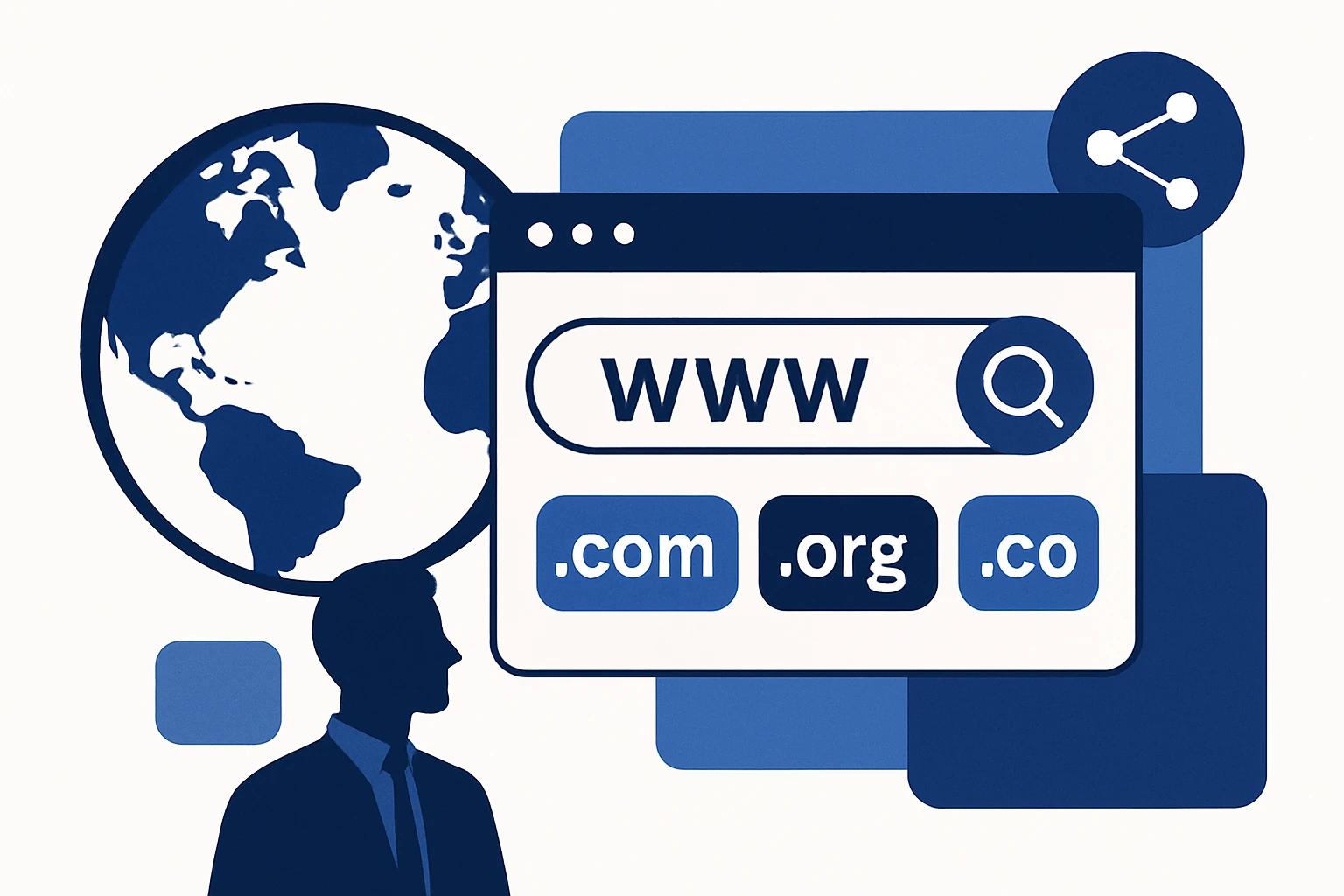
A top-level domain (TLD) is the final segment of a domain name after the last dot, such as .com, .uk, or .shop. The DNS root zone maintains a registry of active TLDs, and ICANN’s New gTLD program has expanded the namespace to include many language scripts and branding strings. This expansion is designed to increase choice and competition while enabling identity signals that align with users’ expectations in different markets.
For practitioners, the practical takeaway is: your TLD choice should align with how and where your audience looks for you, how you plan to host and maintain the site, and how you’ll present your brand in different regions. It’s not merely about a marginal SEO boost, it’s about clarity, trust, and operational efficiency. For a broader view of how new gTLDs are introduced and categorized, see ICANN’s explanations of why there are different types of gTLDs.
References: ICANN explains the variety of gTLDs and the rationale behind expanding the namespace to support diverse languages and communities. Why are there different types of gTLDs?
Types of TLDs and what they signal to users
The domain ecosystem today includes several major categories. Understanding these categories helps you map domain strategy to brand positioning and geographic reach.
- ccTLDs (country-code TLDs) such as .uk, .de, or .fr are traditionally associated with a specific country. They often convey local relevance and can support geo-targeting and local brand perception when implemented with appropriate hosting and content. Google’s ongoing discussions about ccTLDs in search context highlight how brands should think about country-specific signals, even as general SEO signals evolve. Google’s ccTLD update provides context for how these signals are used in practice.
- gTLDs (generic TLDs) such as .com, .net, .org, and newer variants like .shop, .tech, or .marketing. gTLDs are not country-bound and can serve global audiences. They remain the most trusted and familiar extensions for many users, and the namespace expansion under ICANN’s New gTLD Program has broadened branding opportunities without changing fundamental SEO mechanics. For an overview of why different gTLD types exist, see ICANN’s general FAQ on new gTLDs.
- New gTLDs and IDNs the New gTLD Program has introduced hundreds of extensions in multiple scripts and languages, broadening possibilities for global brands that want culturally resonant identifiers. These extensions are designed to be inclusive and linguistically diverse, though adoption and perceived credibility should be weighed against brand clarity and market familiarity.
Key takeaway: TLD signaling is nuanced. ccTLDs can anchor local relevance, global brands often perform well with reputable gTLDs while maintaining clear localization via content, hreflang, and subdirectories. ICANN’s programmatic rationale for the new gTLDs reinforces that there are legitimate branding and accessibility reasons to choose or diversify TLDs.
SEO reality: do TLDs influence rankings?
There is broad industry consensus that the TLD itself is not a direct Google ranking factor. In plain terms: choosing .com versus .io does not automatically boost your page in search results. This isolates the TLD decision from pure SEO mechanics and puts the emphasis on user experience, trust, content quality, and technical optimization. Google’s own guidance on site position in search explicitly addresses the question of TLD impact: it does not treat TLDs as a primary ranking signal. This means that a high-quality page on a .shop or a well-structured ccTLD can rank just as well as a page on a traditional .com when other factors are strong. Learn more about site position in Google Search.
That said, the TLD matters in other practical ways. Brand recognition, click-through rates, and user trust can indirectly influence rankings through engagement metrics and backlink acquisition. Moreover, geo-targeting signals - whether via a ccTLD or a geotargeted setup - still matter for aligning content with local intent, even if the TLD itself isn’t a ranking factor. Google has discussed its evolving approach to ccTLDs and localization, indicating that the broader localization strategy should be anchored in language, content, and technical signals, not merely the domain ending. Google’s ccTLD signaling update.
In short: the right TLD can help align user expectations and trust, but it won’t directly boost rankings by itself. The most reliable path to ranking remains engineering quality: fast hosting, accessible content, mobile optimization, structured data, and strong inbound links. This nuance is why many experienced teams treat the TLD as a branding and localization decision rather than a core SEO lever.
A practical framework to choose TLDs for a global brand
Below is a straightforward framework you can apply when deciding which TLDs to deploy across markets. It blends brand considerations, geographic targeting, and practical maintenance realities into a repeatable process.
- Step 1 - Define audience geography and language: List key markets by country and language. If your product is language-agnostic but location-specific, a global gTLD with localized content may be preferable. If you serve a single country predominantly, a ccTLD can reinforce local relevance.
- Step 2 - Align with brand positioning: Consider whether a local or global TLD signals better brand alignment. A trusted .com may project broad reach, while a country code or brand-specific TLD (for example, .google in related contexts) can reinforce identity for a target audience.
- Step 3 - Assess portfolio feasibility: Balance the number of domains you’ll manage with the value each adds. If adopting multiple TLDs, plan redirects, canonicalization, and consistent branding to avoid content duplication issues.
- Step 4 - Evaluate cost and maintenance: New gTLDs can carry different renewal costs and branding considerations. A clear plan for renewal reminders, SSL provisioning, and DNS management reduces operational risk.
- Step 5 - Plan localization and tech alignment: Use hreflang annotations, subdirectories, or subdomains to signal language and region, and configure server locations and content delivery networks to optimize latency for target markets.
To help with the portfolio decision, you can explore WebAtla’s comprehensive TLD catalog, which aggregates domain data and availability across many extensions. For a direct reference to their TLD directory, see WebAtla’s tld page. WebAtla - TLD directory.
Practical considerations and common mistakes to avoid
Even with a solid framework, several pitfalls recur. Being aware of these can save time and money.
- Mixing local trust with global reach too early: Adopting a ccTLD before you have a clear localization and content strategy can confuse users and dilute brand clarity. It’s often better to start with a strong global TLD and layer localization through content and signals rather than domain structure alone.
- Underestimating maintenance: More domains mean more DNS records, SSL certs, and monitoring. If you adopt multiple TLDs, automate where possible and assign clear ownership for renewals and security.
- Relying on the TLD for SEO gains: Don’t expect to outrank competitors merely by picking a different extension. Align the TLD with a real localization strategy, robust on-page optimization, and credible backlink profiles.
- Over-allocating to new gTLDs without market evidence: While new gTLDs offer branding opportunities, they can also introduce perceived risk or confusion if the target audience isn’t familiar with the extension. Validate intent and trust with target users before investing heavily.
A structured block you can reuse: a quick TLD decision framework
The following framework distills the decision process into a reusable checklist you can apply to any project. Use it to compare two or three candidate extensions side by side.
- Geography alignment: Does this TLD communicate relevance to the target country or language?
- Brand resonance: Will the extension strengthen, not distract from, your brand message?
- Audience trust: Do users perceive this extension as credible in the target market?
- Content strategy: Can you reliably localize content to justify the TLD choice?
- Maintenance burden: What is the ongoing cost and operational complexity?
- Analytics approach: How will you measure engagement and conversions across extensions?
- Risk and governance: Is there regulatory or policy risk in certain regions with certain TLDs?
For deeper context on the logic behind the New gTLD Program and its role in expanding the namespace, ICANN provides extensive general resources. ICANN – About New gTLDs.
Limitations and common mistakes in TLD strategy
Even the best-laid plans have limits. Here are real-world cautions to keep in mind:
- Geographic signals aren’t the only factor: TLDs are one signal among many. Use content localization, hreflang, and a robust international SEO strategy to reinforce geographic intent beyond the domain ending. Google’s guidance reinforces that TLDs are not a direct ranking signal, so invest primarily in technical and content quality. Google: Site position in search.
- New gTLDs require trust-building: Some audiences may take longer to associate a new gTLD with quality. Pair new extensions with credible content, strong UX, and consistent branding to overcome initial skepticism.
- Fragmented user experiences: If you deploy multiple TLDs, ensure a unified user journey. Redirects, canonical tags, and consistent navigation reduce confusion and avoid perceived content duplication.
Putting it all together: a vendor-neutral take on the right approach
For agencies and developers focused on robust, global-ready websites, the best practice is to treat TLDs as a branding and localization instrument, not a quick SEO lever. The choice should be grounded in audience geography, language, and the practicality of site maintenance. ICANN’s and Google’s guidance both highlight that the namespace expansion is about identity and reach, not a shortcut to rankings. When combined with a disciplined technical SEO program - fast hosting, accessible content, structured data, and a well-constructed backlink profile - the right TLD strategy can meaningfully support global growth.
Conclusion: make a deliberate, evidence-based TLD decision
The modern domain landscape offers a spectrum of extensions to match diverse markets and brand stories. While the TLD itself won’t directly boost search rankings, its impact on trust, localization, and operational practicality is real. By applying a clear framework, leveraging credible guidance from ICANN and Google, and using domain data resources such as WebAtla’s TLD catalog, you can craft a TLD strategy that aligns with your global growth goals. As you finalize decisions, remember that the strongest SEO foundation remains content quality, technical excellence, and a user-first experience.
Resources and references
Key background sources to deepen your understanding include ICANN’s overview of the New gTLD Program and differentiation among gTLD types, along with Google’s guidance on how TLDs relate to search performance. ICANN provides general context on why multiple gTLD types exist, and Google clarifies that generic TLDs are treated equally in search results, with geographic and user signals driving localization where appropriate. Why are there different types of gTLDs? Google ccTLD signaling updates Site position in search