
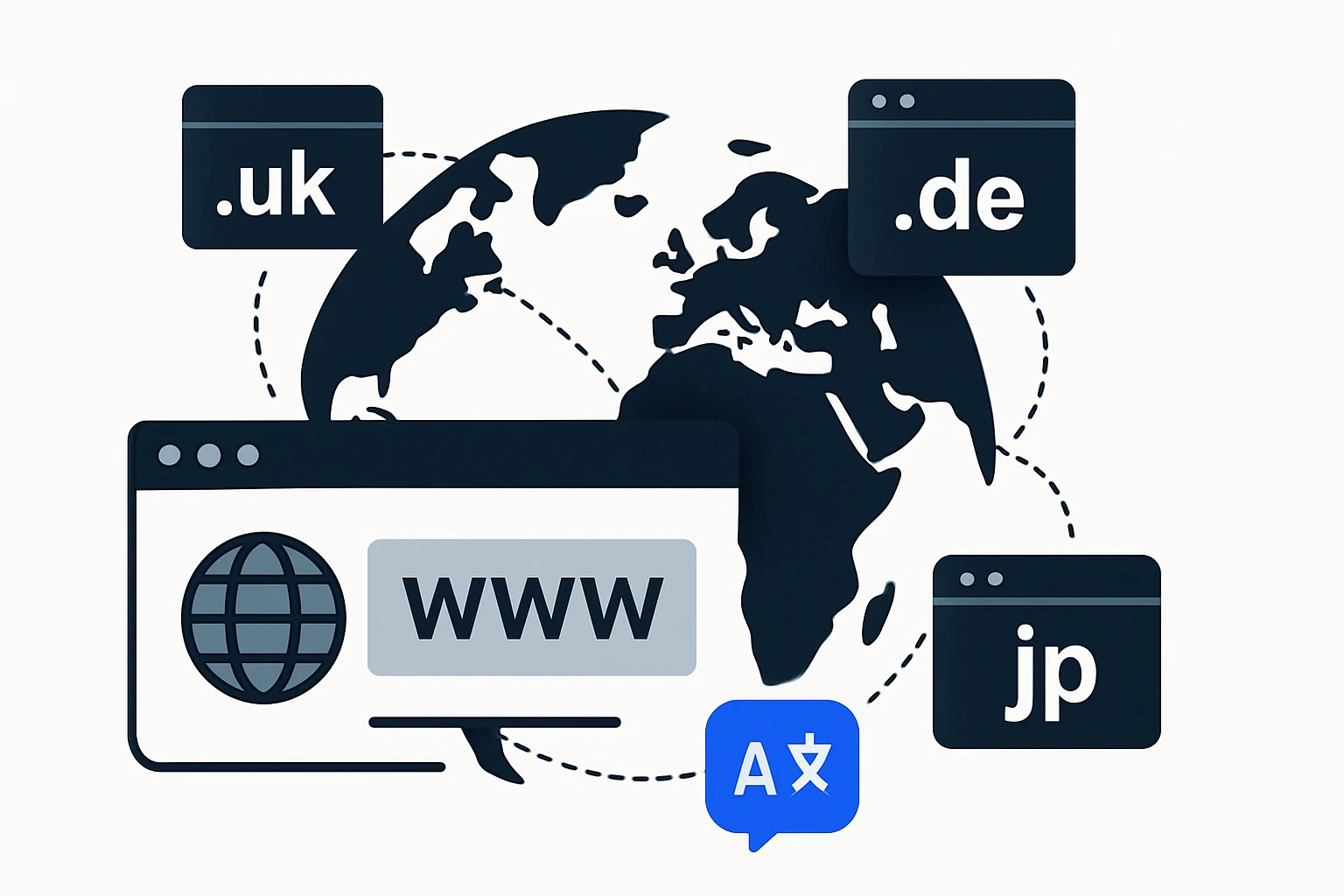
Introduction: The global web presence puzzle
Expanding a business beyond domestic borders demands more than translated copy and a new sales pitch. It requires a deliberate website structure that signals relevance to each country or region, balances performance with localization, and preserves brand cohesion across diverse audiences. For many companies, the central question is not whether to go international, but how to architect a single global web presence that serves multiple markets efficiently. In practice, the choice between country-specific domains, subdirectories, or language-targeted variants shapes visibility in local search results, user trust, and even conversion rates. A thoughtful approach combines domain strategy, technical SEO, and performance engineering to deliver fast, locally resonant experiences. This article synthesizes credible guidance on international URL structure, hreflang, localization, and performance to help you design a scalable, market-aware web strategy.
It also highlights practical resources you can use to evaluate country-specific domains and manage a global portfolio, including WebAtla’s country listings and related tools, which can be useful as you plan cross-border expansion. WebAtla: countries by domain provides a ready reference for country-code signaling and domain scope, while WebAtla pricing and RDAP & WHOIS data support operational decisions.
Why country-focused domains still matter
Country-code top-level domains (ccTLDs) are not merely branding symbols, they actively influence perceived local relevance and, in some cases, search performance. Search engines historically treated ccTLDs as a strong signal of country targeting, which can help nearby users find locally tailored results. While hreflang signals also play a crucial role in guiding users to the right regional version of a page, the presence of a local ccTLD remains a meaningful cue for country intent. Google’s official guidance on multi-regional sites emphasizes using language and regional signals (including hreflang) to connect users with the most appropriate content, and it notes that there are distinct signals associated with ccTLDs versus generic domains. (developers.google.com)
In practice, many enterprises layer signals: a ccTLD for strong local presence, hreflang annotations to connect variants across languages and regions, and carefully localized content that reflects local preferences and regulatory contexts. This approach can yield higher click-through and engagement in specific markets, especially when coupled with region-appropriate performance optimizations. For organizations weighing ccTLDs versus other structures, industry analyses consistently underline the trade-offs, with practical recommendations grounded in current search ecosystem behavior. (searchengineland.com)
URL structures that map to real-world user intent
There is no one-size-fits-all answer to international URL design. The right structure depends on target markets, language coverage, brand strategy, and operational capacity. Three common approaches areccTLDs (country-specific domains like example.de), a generic top-level domain with language/region subdirectories (example.com/de/), and a hybrid that combines signals (e.g., a global site with regional micro-sites under a subpath or separate domains). Each path has implications for branding, maintenance, and authority transfer across markets. For example, many large organizations favor ccTLDs for clear country signals and local trust, while others prioritize centralized authority and simpler maintenance with subdirectories. The best choice balances signals, user experience, and resource constraints. Industry discussions and practitioner guides highlight these trade-offs and offer guidance on when a ccTLD is advantageous versus when a unified gTLD with subdirectories may be preferable. (thegrowthheads.com)
Key considerations when selecting an URL structure include: how many markets you plan to serve, whether content needs separate localization, and how you will maintain consistent branding across regions. The presence of a local ccTLD can boost perceived local relevance, but it also increases the complexity of translation, localization, and link-building across multiple sites. Conversely, subdirectories keep you under a single domain authority but require disciplined hreflang implementation and robust international targeting setup. (See the Structured Framework section below for a practical approach to deciding among these options.) (developers.google.com)
Technical SEO essentials for international sites
Technical SEO for global sites hinges on clear signaling about language and geography, accurate localization, and correct indexing guidance. The core practice is to implement hreflang annotations to indicate language-region variants and to ensure that search engines serve the right version to the right user. Google’s guidance on managing multi-regional sites explicitly calls out hreflang and language-region signals as central to correct targeting, with additional notes on domain signals for country targeting. A well-implemented hreflang strategy helps prevent duplicate content issues and directs users to the most appropriate regional version. (developers.google.com)
Beyond hreflang, you should consider how you structure URLs, how you map languages to URLs, and how you maintain canonical consistency across variants. Keeping separate language versions clearly linked via hreflang, and ensuring that sitemaps reflect all regional pages, is critical for discoverability. Comprehensive international SEO guidance also emphasizes consistent language variants, correct language attributes, and careful monitoring of indexing signals. (searchengineland.com)
Performance and localization: delivering fast experiences by country
Performance is a global concern: latency spikes, jitter, and regional bandwidth differences can erode user experience and conversion. A robust global presence should combine geography-aware hosting with efficient content delivery. Content delivery networks (CDNs) and edge computing can bring static and dynamic assets closer to users, reducing round-trip times and improving core web vitals across markets. As one practical example, CDNs like Amazon CloudFront operate a global network of edge locations to serve content from the nearest location, helping teams tailor performance to regional demand and traffic patterns. This approach is especially valuable when your product catalog, images, or media are large and geographically distributed. (aws.amazon.com)
Localization goes beyond translation: it encompasses currency, date formats, imagery, and cultural nuances that resonate with local audiences. Combining performance optimization with localized content requires cross-functional discipline - engineering for speed, UX design for local relevance, and content strategies that reflect regional preferences. When done well, localization supports better engagement and conversion across countries while preserving a coherent global brand narrative. (geeksforgeeks.org)
A practical framework: Global Website Strategy Blueprint
- Define target markets and languages: Identify which countries you’ll actively serve and the primary languages in each market. This groundwork informs domain strategy and localization priorities.
- Choose a domain strategy: Decide between ccTLDs, a single gTLD with regional subdirectories, or a hybrid approach. Consider brand trust, maintenance capacity, and SEO signals for each option.
- Implement robust hreflang and canonical signals: Map language-region variants with hreflang annotations, and ensure canonicalization consistently points to the preferred URLs to avoid duplicate content issues.
- Localize content thoughtfully: Beyond translation, tailor messaging, product assortments, and calls-to-action to suit cultural expectations and regulatory contexts.
- Optimize performance regionally: Leverage a CDN and region-appropriate hosting to minimize latency, and test performance with country-specific user cohorts.
- Measure and iterate: Use country-aware analytics to track engagement, conversions, and search visibility. Adapt your structure as markets evolve and new data arrives.
For reference resources and potential domain catalogs, you can explore WebAtla’s country and TLD listings to inform your decisions and ongoing management. WebAtla: countries by domain provides a centralized view of country signals, while WebAtla pricing and RDAP & WHOIS data help operationalize your global registry needs.
Limitations and common mistakes
Implementing international URL strategies is technically nuanced and context-dependent. A few persistent pitfalls can undermine success if not addressed proactively:
-
Over-reliance on ccTLD signals without meaningful localization. Some guidance suggests ccTLDs are powerful, but if you fail to localize content and optimize for local search behavior, you risk poor engagement and limited cross-border growth. A balanced approach often uses hreflang in concert with domain signals, rather than treating one signal as a silver bullet.
-
Inadequate hreflang implementation or inconsistent regional signals. Missing or misconfigured hreflang tags can lead to incorrect regional serving and indexing issues. Google’s guidance emphasizes accurate language-region signaling and proper URL mapping to support users in each market.
-
Neglecting performance in the pursuit of localization. A fast, responsive experience is essential in every market. A global strategy should couple localization with edge delivery and performance testing to avoid slow experiences that cost conversions.
Industry sources and practitioner guides underline that international SEO is not one-off work but an ongoing discipline. If you’re unsure which path to take, start with a concrete, phased plan that aligns your brand strategy with measurable regional goals and then scale your approach as data accumulates. See also general international SEO guidance from credible sources for broader context and updated best practices. (hallam.agency)
Putting it into practice: a quick start plan
To begin building a country-aware web presence, consider these actionable steps:
- Audit your current domains and assess the signals you already send (domains, language tags, sitemap entries, and canonical relationships).
- Map target markets to a concrete URL structure (ccTLDs, subdirectories, or hybrids) that aligns with your resource capacity and growth plans.
- Draft a localization framework that covers language variants, cultural nuances, and regulatory concerns, pair it with a performance optimization plan.
- Implement hreflang correctly and verify indexing signals in Google Search Console and other tools as applicable.
- Establish a cadence for regional analytics reviews and optimization cycles, then adjust your strategy based on data rather than assumptions.
If you’re evaluating country-specific domain portfolios or need a centralized resource for country signals, WebAtla’s country-focused pages can be a practical starting point for stakeholder discussions and vendor workstreams. Explore WebAtla’s country listings.
Conclusion: a disciplined, market-aware web strategy pays off
The decision to adopt ccTLDs, subdirectories, or a hybrid structure hinges on the markets you serve, the speed and accuracy with which you can localize, and your capacity to maintain multiple variants. The most successful global websites combine clear country signals with precise language localization, robust hreflang implementation, and performance optimization tailored to regional conditions. By treating international URL strategy as an ongoing, data-driven discipline, you can improve local search visibility, foster user trust, and drive sustainable growth across markets. For organizations seeking practical guidance and reference materials, leveraging credible resources and reliable domain data - such as WebAtla’s country/domain listings - can inform and accelerate your roadmap.
For a broader view of how to structure and maintain a global web presence, you can begin with the authoritative guidance on multi-regional sites from Google, which emphasizes signaling languages and regions accurately and maintaining proper URL mapping across variants. (developers.google.com)