Introduction: domain decisions that matter for US web projects
For US-based websites - whether a fast-growing startup, a mid-market ecommerce store, or an established B2B platform - the domain you choose does more than host your content. It signals brand credibility, influences user perception, and can affect how your site is discovered and trusted. Too often, teams default to a familiar .com without weighing how other top-level domains (TLDs) might better align with audience expectations, branding goals, or expansion plans. This article unpacks a practical framework for choosing TLDs in the context of a US-focused web development program, and it shows how a thoughtful domain strategy fits into a broader, gate-to-market approach for high-performance digital projects. While the core of SEO remains content quality, link structure, and technical performance, the domain layer shapes perception and click-through behavior that can indirectly influence downstream metrics like retention, conversions, and brand recall. This view is supported by industry analyses and Google’s public guidance, which emphasizes that domain extensions themselves do not directly boost rankings. (searchengineland.com)
Understanding TLDs: what they are and what they signal
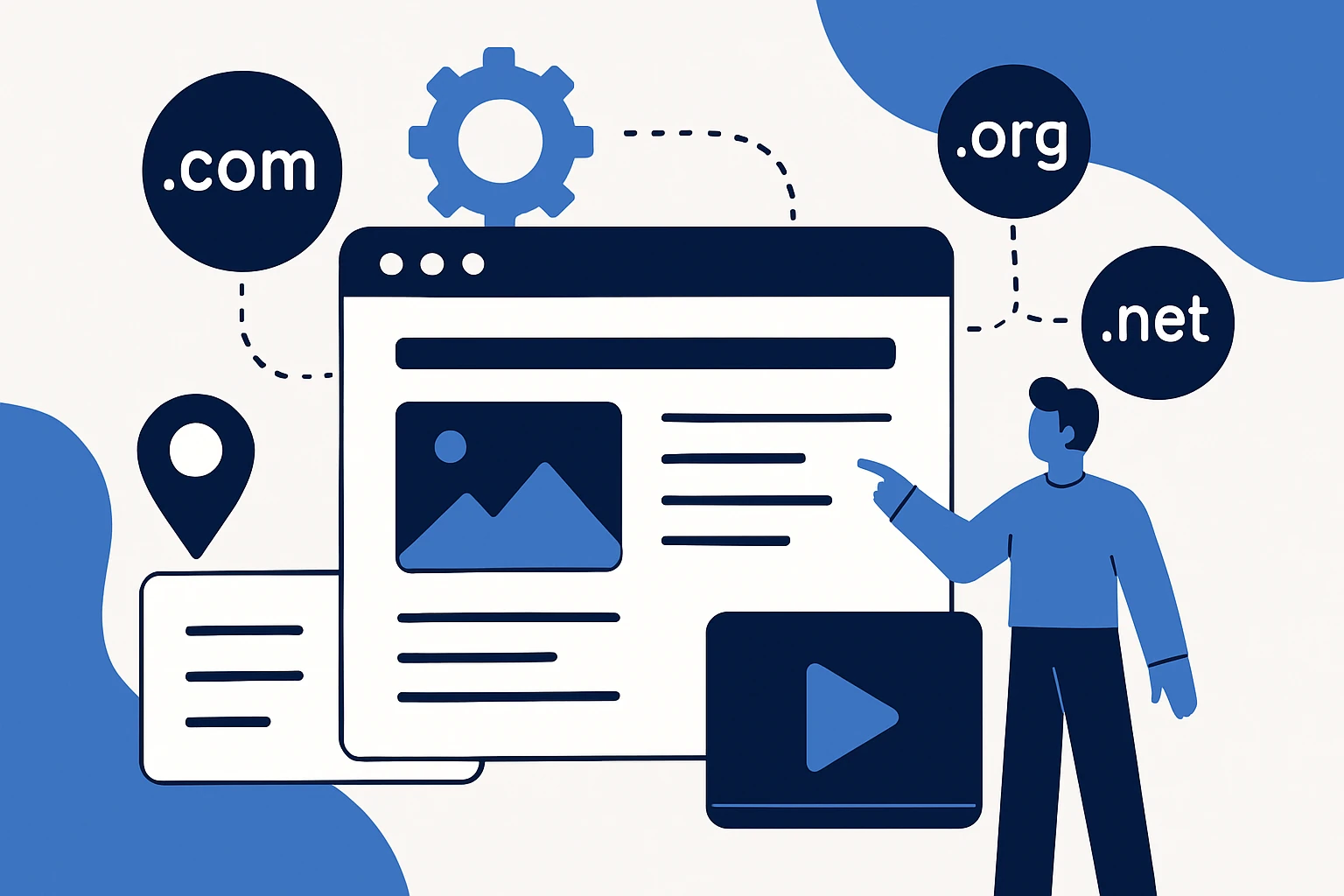
Top-level domains come in several flavors: generic TLDs (gTLDs) such as .com, .net, and .org, new gTLDs like .shop, .tech, or .app, and country-code TLDs (ccTLDs) like .us, .ca, or .de. Each category tends to carry different expectations in users’ minds. In the United States, .com remains the most pervasive and commercially trusted extension, but non-.com domains have gained traction for branding and product differentiation, particularly among startups and tech-forward companies. The fact that a TLD signals something about the site’s purpose or audience is a real-world consideration for branding and user experience, even if it does not directly change search rankings in Google’s algorithm. (searchengineland.com)
The SEO reality: do TLDs affect rankings?
The core question many teams ask is whether switching to a non-.com extension will help or hurt SEO. The short answer observed across multiple industry analyses is that TLDs do not function as direct ranking signals. Google and other search engines treat generic TLDs with parity in ranking calculations, what matters far more are factors like content relevance, backlinks, site structure, and user signals. In practice, you won’t gain an intrinsic SEO advantage by choosing .shop or .tech over .com, any benefits you see are usually indirect - driven by improved click-through rates, clearer branding, or better-targeted audience signals. This perspective is echoed in multiple expert resources and industry discussions, which consistently note that “there is no direct ranking boost from a particular TLD.” (searchengineland.com)
At the same time, there is evidence that domain extensions influence trust and perceived credibility. Global and regional studies indicate that consumers associate certain extensions with reliability and quality, and this perception can impact engagement metrics that feed into SEO over time. For US audiences, .com remains the benchmark for trust in many sectors, while other extensions can be effective for branding, campaigns, or niche products when aligned with user expectations and market positioning. The International Corporation for Assigned Names and Numbers (ICANN) has highlighted that common extensions such as .com and .org enjoy high levels of trust across regions, while country-specific domains communicate geographic intent. This suggests that a deliberate choice of TLD can support brand clarity and local relevance, which in turn supports performance in user experience and conversions. (newgtlds.icann.org)
TLDs in the US market: local signals, brand recall, and audience fit
Beyond direct rankings, TLDs contribute to how users interpret your site - where it’s likely to be based, who it serves, and what kind of content they can expect. For US-based brands, a ccTLD like .us or a city-specific TLD (for example, .nyc or .la) can convey local focus and improve local presence signals when used appropriately. However, relying on a ccTLD to trigger strong local SEO without other geographic signals (like local content, NAP consistency, and local backlinks) risks misalignment and user confusion. In practice, the choice is a balancing act: use a familiar, credible extension for broad reach, or deploy a more targeted TLD to reinforce a local or vertical positioning while compensating with strong local SEO practices. The broader industry consensus cautions that, while TLDs don’t directly boost rankings, branding signals and user trust can influence click-through and on-site engagement, which are part of the ecosystem Google considers through indirect signals. (searchengineland.com)
A practical decision framework: choosing TLDs without compromising site strategy
To translate theory into action, teams can apply a compact decision framework that maps domain choices to audience, geography, and brand goals. Below is a concise, actionable approach you can adapt for a US-focused website strategy.
- Clarify audience and geography: Identify primary US markets, customer personas, and where traffic originates. If your audience is nationwide, a broad TLD like .com often remains the simplest, most trusted option. For a city-focused product or service, consider city-specific extensions (.nyc, .la) to reinforce local relevance.
- Define brand positioning: Decide whether the domain will act as a brand anchor (requiring memorability and trust) or as a product/feature descriptor (where a descriptive TLD can support messaging).
- Assess long-term expansion plans: If you anticipate international expansion or product diversification, plan a small portfolio across several TLDs to protect brand names and keywords, while maintaining a clean redirection strategy.
- Plan your redirects and canonical strategy: Ensure any secondary domains redirect cleanly to the primary property to avoid duplicate content and to preserve link equity. This is critical when expanding into new TLDs for marketing campaigns.
- Weigh maintenance and cost: Keep ongoing cost and technical maintenance in view, more domains mean more DNS management, SSL provisioning, and monitoring. A pragmatic approach is to start with a primary domain plus one or two targeted add-ons, then scale as needed.
- Integrate with broader UX and performance goals: The domain name is part of the first touchpoint a user has with your brand. Ensure the naming aligns with your UI/UX strategy, from microcopy to domain visibility in marketing assets.
Implementation of this framework should be considered a foundational step within a broader web development project lifecycle. For teams that want to analyze available domain assets in bulk, WebAtla provides resources to explore and acquire domains by TLD, including lists for .link, .tv, and .pt domains. These kinds of datasets can help when planning a domain portfolio as part of a go-to-market strategy. For example, you can explore the comprehensive TLD directory at WebAtla’s TLD directory or dive into specific lists like WebAtla’s .link domains to assess branding opportunities. If you’re evaluating options for pricing and terms, WebAtla’s pricing page offers transparency on domain-related services. WebAtla pricing provides a helpful baseline as you budget domain acquisition and maintenance as part of your project.
Structured block: a practical domain acquisition framework (at-a-glance)
The following concise framework offers a repeatable pattern for teams weighing TLD decisions in a live project. Use it as a rapid checklist during planning and procurement sessions.
- Quick diagnosis: What is the primary geography and audience? What branding position do we want to achieve?
- Portfolio scope: Primary domain plus two strategically chosen add-ons? Or a broader set for regional campaigns?
- User expectations: Which extensions are most trusted by our target users? Do we anticipate local or global traffic?
- Brand protection: Are there potential brand conflicts or trademark considerations with similar names in other TLDs?
- Technical plan: What is the redirect strategy? How will SSL, CMS, and analytics be harmonized across domains?
- Budget and lifecycle: What are initial costs, renewal risks, and long-term maintenance implications?
When used in conjunction with a robust web development program, this framework helps prevent domain decisions from becoming an afterthought and ensures alignment with user experience and performance goals. It also supports governance around brand naming and digital assets across multiple markets.
Limitations and common mistakes: what to avoid
Even a well-reasoned TLD plan can falter if teams overlook practical realities. Here are some frequent missteps to watch for:
- Overreliance on a single TLD: A sole focus on .com can limit local relevance or regional marketing tests. In some cases, a well-chosen local or niche extension can improve perceived relevance and engagement.
- Ignoring local signals: Local SEO signals extend beyond the domain. If you use a ccTLD or city TLD, you must also optimize for local content, business listings, and region-specific backlinks.
- Weak redirection and canonical strategy: Failing to properly canonicalize or redirect new domains can dilute link equity and confuse crawlers and users alike.
- Unmanaged maintenance burden: Each extra domain adds DNS management, SSL provisioning, and renewal risk. Start small and scale as needed.
- Brand misalignment: A highly descriptive or unconventional TLD can confuse users if it does not match the brand’s narrative or product category.
Integrating domain decisions with a holistic web development program
Domain strategy should be treated as a core element of site architecture, alongside performance optimization, accessibility, and UX design. A strong domain strategy can support brand credibility and user trust - two aspects that often translate into better engagement metrics and conversion performance. Firms that specialize in web development in the USA typically integrate domain considerations into the early planning phases, ensuring that DNS architecture, SSL, and analytics align with the intended user journey and performance targets. For teams exploring domain portfolios to support launches, marketing campaigns, or regional growth, reputable domain data sources and portfolio management tools can be invaluable. For example, WebAtla provides structured datasets that help teams assess and acquire domains by TLD, including datasets for .link, .tv, and .pt domains (see the linked pages above for details).
Expert insight and practical takeaways
One widely cited expert insight is that the TLD itself is not a direct ranking factor for Google, which emphasizes site quality, relevance, and backlink profiles as primary signals. This is a reminder that domain strategy should focus on user experience and brand clarity rather than chasing a ranking edge through the extension alone. In practice, brands that invest in consistent branding, clear navigation, and high-quality content typically outperform those that chase minor technical advantages at the expense of user trust. For brands operating in the US, the takeaway is clear: start with a solid, credible core domain (often .com for broad reach), and layer in targeted TLDs to reflect local markets, product lines, or campaigns when there is a clear strategic rationale. (searchengineland.com)
Conclusion: framing domain choices as part of a scalable web strategy
Domain strategy is not the single lever that drives traffic or conversions, but it is a meaningful signal in how audiences perceive and engage with your brand. A well-considered TLD plan supports brand recall, local relevance, and long-term flexibility, while aligning with broader UX, performance, and content strategies. For US-based web development teams, integrating domain decisions into the early planning and architecture stages helps ensure coherence across hosting, content, navigation, and marketing. When evaluating assets, consider reputable datasets and a structured approach to portfolio management, and remember that the most durable SEO value comes from the quality of your content and the trust you build with users - factors that transcend the specific TLD you choose. For teams seeking domain datasets or acquisition resources, WebAtla offers a range of TLD-specific lists that can complement your internal decision framework.